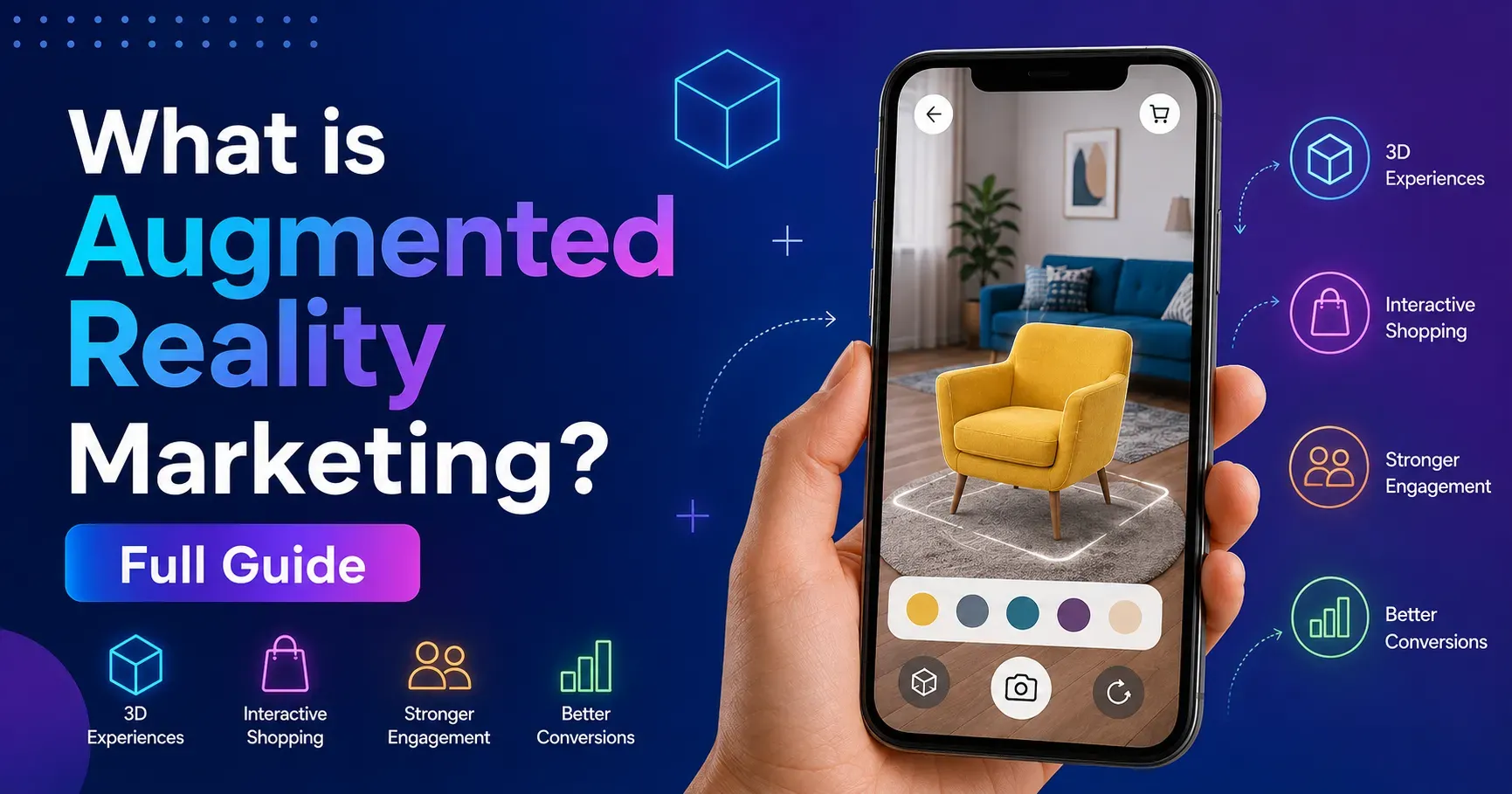
What is Augmented Reality Marketing Full Guide
Augmented reality has moved well beyond novelty filters and gaming apps, becoming a genuinely practical marketing tool that brands use to let customers try products virtually, visualize purchases in their own space, and engage with interactive branded experiences directly through their phone camera. In 2026, augmented reality marketing has matured into an accessible, increasingly common part of the marketing toolkit rather than an experimental curiosity reserved for major brands with massive budgets. This guide explains exactly what augmented reality marketing is, how it works, the different formats brands are using, and how to think about whether it makes sense for your own marketing strategy.
What Augmented Reality Marketing Actually Means
Augmented reality marketing refers to the use of AR technology, which overlays digital content onto the real world through a smartphone camera or specialized device, to create interactive marketing experiences for customers. Unlike virtual reality, which creates an entirely separate digital environment, augmented reality adds digital elements on top of the real world a person is actually looking at, such as showing how a piece of furniture would look in an actual living room, or letting someone virtually try on a pair of glasses using their own face through their phone camera.
This blending of digital content with real world context makes AR marketing feel significantly more immediate and practical than more immersive but separate virtual reality experiences that require dedicated hardware.
How Augmented Reality Marketing Actually Works
Most consumer facing AR marketing experiences run directly through a smartphone camera, using the device's camera and sensors to understand the surrounding physical space, then overlaying digital content that appears to interact naturally with that environment in real time. This can involve placing a virtual object onto a real surface, such as a piece of furniture appearing on an actual floor, or tracking a person's face to apply virtual makeup, glasses or other try on style content accurately as they move.
Social media platforms have made AR increasingly accessible by building filter and effect creation tools directly into their platforms, while dedicated AR development tools allow for more sophisticated, custom branded experiences beyond standard social media filters available to everyone.
Common Formats of Augmented Reality Marketing
Virtual Try On Experiences
Particularly popular in beauty, eyewear and fashion, virtual try on AR lets customers see how a product would look on them directly through their phone camera before making a purchase decision, significantly reducing purchase uncertainty and return rates for retailers.
Product Visualization in Real Spaces
Common in furniture, home decor and larger product categories, this format lets customers visualize how a specific item would look and fit within their own actual physical space before committing to a purchase they cannot easily return.
Branded Social Media Filters and Effects
Custom AR filters and effects allow users to interact with branded content in a fun, shareable way directly within social media platforms, often generating organic reach as users share their experience with their own audience and followers.
Interactive Packaging and Print
Some brands use AR to bring physical packaging or print materials to life, where scanning a product package or advertisement with a smartphone camera triggers an interactive digital experience layered on top of the physical item itself.
Location Based AR Experiences
These experiences overlay digital content onto specific physical locations, such as an in store AR scavenger hunt or location triggered branded content that appears when a customer is physically present at a specific relevant place or store.
AR Advertising Within Apps and Platforms
Some advertising formats now incorporate AR directly within the ad unit itself, allowing users to interact with a product in an immersive way without leaving the app or platform they are currently using at that moment.
Why Brands Are Investing in AR Marketing
Reducing Purchase Uncertainty
AR experiences, particularly virtual try on and product visualization, help customers make more confident purchase decisions by reducing the uncertainty inherent in buying products online without being able to physically see or try them first before checkout.
Increasing Engagement and Shareability
Interactive AR content tends to generate significantly higher engagement than static content, and the novelty and fun factor often encourages organic sharing, extending a campaign's reach well beyond its initial paid distribution and budget.
Differentiating From Competitors
Since AR marketing still feels relatively fresh and innovative to many consumers, brands that use it thoughtfully can differentiate themselves from competitors relying purely on traditional, more conventional marketing formats and tactics.
Bridging Digital and Physical Experiences
AR marketing uniquely bridges the gap between digital convenience and physical, tangible experience, offering customers a taste of an in person try before you buy experience even when shopping entirely online from home.
Industries Where AR Marketing Has Found Strong Traction
Beauty and Cosmetics
Virtual makeup try on has become genuinely mainstream within the beauty industry, allowing customers to test different products and shades directly through their phone camera before purchasing, significantly reducing uncertainty around color matching and skin tone.
Fashion and Eyewear
AR try on for clothing, accessories and particularly eyewear has grown significantly, helping address one of the biggest barriers to online fashion purchasing, genuine uncertainty about fit and appearance before the item arrives.
Furniture and Home Goods
AR product visualization has become a standard feature for many furniture and home goods retailers, allowing customers to see exactly how an item would look and fit within their own actual living space before buying it outright.
Automotive
Car manufacturers increasingly use AR to let customers visualize different vehicle colors, configurations or features, sometimes even overlaying a virtual vehicle onto a customer's own driveway or garage space at home.
Retail and Packaged Goods
Interactive AR packaging experiences help brands within crowded retail categories create memorable, differentiated moments of engagement directly at the point of purchase or afterward once the customer is at home.
How to Get Started With AR Marketing
Identify a Genuine Use Case
Rather than pursuing AR purely for novelty, identify a genuine customer pain point or opportunity AR could meaningfully address, such as purchase uncertainty, engagement opportunities or a genuinely compelling way to showcase your specific product to customers.
Start With Accessible, Lower Cost Formats
For brands new to AR marketing, starting with accessible formats such as social media filters or effects, which often require less technical investment than fully custom AR applications, provides a lower risk way to test audience response first.
Consider Your Specific Platform and Audience
Choose AR formats and platforms based on where your specific target audience already spends time and how they typically engage with content, ensuring your AR investment reaches genuinely interested, relevant users rather than a mismatched audience.
Measure Genuine Impact, Not Just Novelty
Establish clear success metrics beyond simple engagement numbers, considering how AR experiences genuinely influence purchase decisions, reduce returns, or contribute to broader brand awareness and affinity goals over time.
Challenges and Limitations of AR Marketing
Developing genuinely high quality, custom AR experiences can require meaningful technical investment and specialized expertise, representing a real barrier for smaller businesses with limited marketing budgets and resources available to them. AR experiences depend heavily on device compatibility and camera quality, meaning the experience can vary significantly across different users' devices, occasionally creating an inconsistent or frustrating experience for some customers trying it out.
As AR marketing becomes more common, novelty alone is no longer sufficient to generate genuine engagement, meaning brands increasingly need genuinely creative, well executed concepts rather than simply implementing AR because competitors are doing so as well.
The Future Direction of AR Marketing
As AR technology continues improving in accessibility, accuracy and integration directly within popular social and shopping platforms, AR marketing is expected to become an increasingly standard, expected part of digital commerce and advertising rather than a differentiating novelty reserved for a few brands.
Growing integration between AR and artificial intelligence is also enabling increasingly personalized AR experiences, adapting virtual content dynamically based on individual user characteristics and preferences rather than offering a one size fits all experience to every single user who interacts with it.
A Simple Framework for Evaluating AR Marketing
Begin by identifying whether your specific product category or customer journey has a genuine pain point AR could meaningfully address, such as purchase uncertainty or a desire for more interactive engagement from customers. Research how competitors or comparable brands within your industry have used AR, learning from both their genuine successes and their missteps along the way.
Start with accessible, lower cost AR formats to test audience response before committing significant resources to fully custom development that requires more investment. Establish clear success metrics that go beyond simple novelty or engagement numbers alone. Continuously evaluate genuine impact and refine your approach based on real audience response and behavior over time as you learn more.
Final Thoughts
Augmented reality marketing has evolved from a novel curiosity into a genuinely practical, increasingly accessible tool for helping customers make more confident purchase decisions, engage more deeply with branded content, and experience products in ways that bridge the gap between digital convenience and physical, tangible experience. For brands considering AR marketing in 2026, success depends less on simply adopting the technology and more on identifying genuine use cases, executing thoughtfully and measuring real impact beyond surface level novelty. Approached strategically, AR marketing offers a genuinely powerful way to differentiate and connect with audiences throughout 2026 and beyond.