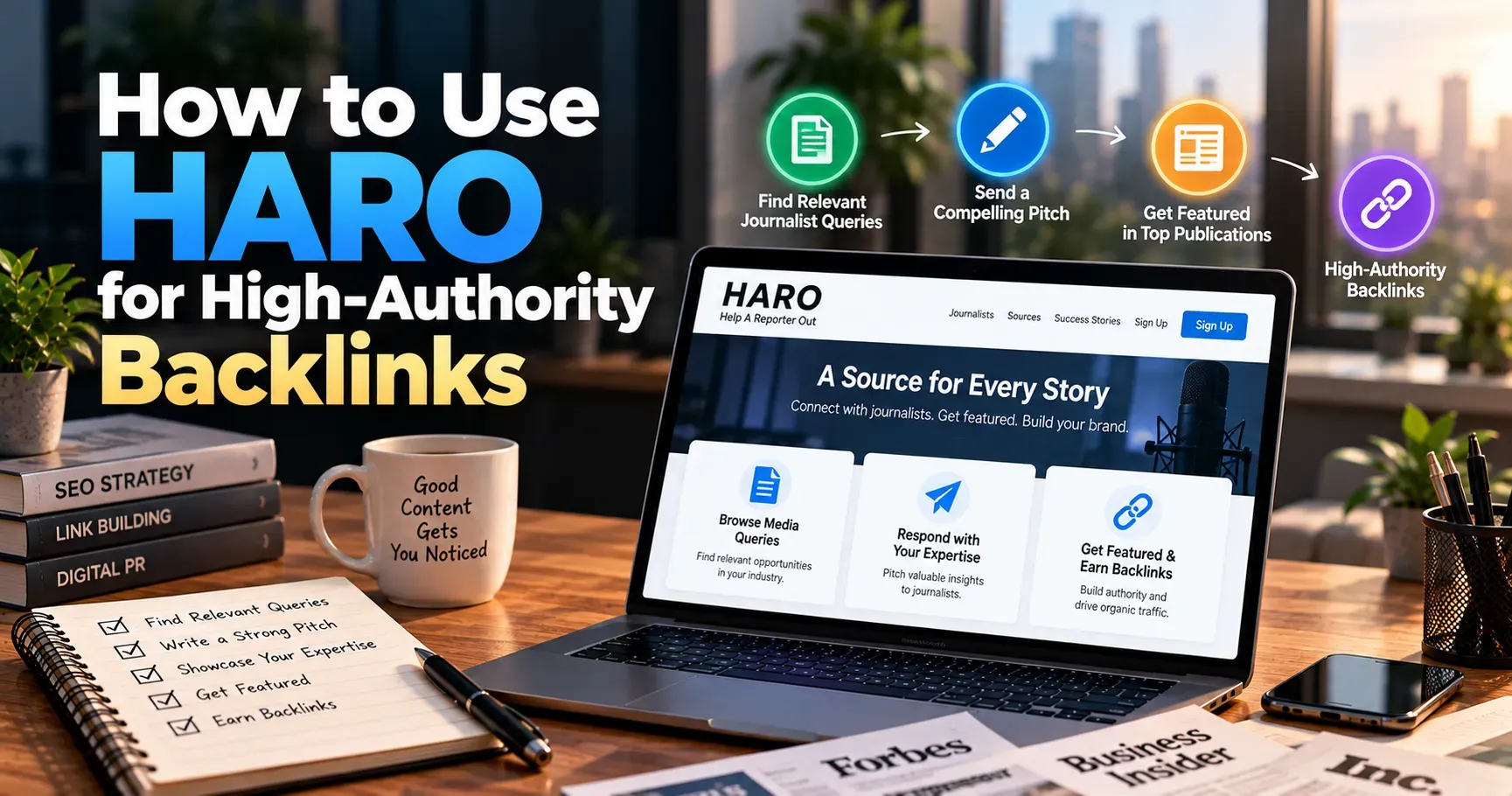
How to Use HARO for High Authority Backlinks
Every website owner eventually learns the same lesson: great content is not enough. To rank well, you also need other trusted websites to mention you and link to you. The trouble is that earning those links is hard. Cold outreach often gets ignored, guest posting takes a long time, and paid placements can put your site at risk.
Help a Reporter Out, better known as HARO, offers a different route. Instead of begging for links, you offer journalists something they already need: a useful expert quote. When a reporter uses your answer in an article, you often receive a mention and a link from a respected news site or industry publication. One good placement can carry more weight than dozens of low quality links.
This guide explains exactly how to use HARO for high authority backlinks. You will learn how the platform works, how to set up your profile, how to choose the right queries, how to write pitches that get noticed, how to follow up, and how to avoid the mistakes that cause most people to fail. Whether you are a solo blogger, a small business owner, or an SEO professional, you can use this process to build a steady stream of quality mentions.
What Is HARO?
HARO stands for Help a Reporter Out. It is a service that connects journalists who need expert input with sources who can provide it. Journalists post queries describing the story they are working on and the kind of expert they want to hear from. Sources read those queries and reply when they can offer real value.
The service has a long history. It began years ago, changed hands more than once, and went through a rough period when spam and low quality pitches damaged its reputation. Today it is active again under new ownership and runs as free daily email digests that list media opportunities across many topics. Because platforms in this space evolve quickly, always check the official site for the latest features, rules, and submission guidelines before you begin.
Why HARO Is Still Valuable for Backlinks
Many marketers wonder whether HARO is still worth the effort. For most people who approach it correctly, the answer is yes. Here is why.
You Earn Links From Trusted Publications
Journalists write for established websites with strong reputations. A mention on such a site sends a powerful signal to search engines that your brand is credible. These are the kinds of links that are very difficult to get through ordinary outreach.
The Links Are Editorial
An editorial link is one that a writer chooses to include because it helps the reader. Search engines value these links because they are earned, not bought or traded. This makes them safer and more durable than many other link building methods.
It Builds Brand Authority Beyond Links
Even when a mention does not include a link, being quoted in a respected publication builds trust. Readers remember your name, other journalists notice you, and AI search tools and search engines see more signals that you are a real authority on your topic.
It Costs Very Little
Signing up as a source is free. Your main investment is time and expertise. That makes HARO especially attractive for small businesses and new websites with limited budgets.
It Creates Compounding Opportunities
Once you are quoted, you can add the publication to a press page on your site. That social proof makes future pitches stronger. Journalists also tend to return to sources who gave them useful answers before.
Understanding the Truth About HARO Links
Before you start, it is important to set realistic expectations. Not every mention will come with a link, and not every link will be the same type.
- Some publications add a followed link to your website, which can pass authority.
- Some add a nofollow link, which passes less direct ranking value but still sends referral traffic and builds visibility.
- Some mention your name and company without linking at all, which still supports brand recognition.
- Publications may change their link policies over time.
Treat HARO as a long term authority building tool, not a guaranteed link machine. Focus on quality, keep track of your results, and judge success by the overall growth in mentions, referral visits, and rankings.
Step 1: Get Ready Before You Sign Up
The people who succeed with HARO prepare first. A few small preparations make your pitches far more convincing.
Define Your Areas of Expertise
Write down the three to five topics you can speak about with real authority. Be specific. Instead of saying marketing, say email marketing for online stores or local SEO for dental clinics. Specific expertise makes it easier to spot the right queries and to sound credible when you reply.
Prepare Your Credentials
Journalists need to know why you are qualified. Prepare a short bio that includes your name, job title, company, years of experience, and one or two notable achievements. Have your website and a professional headshot ready.
Check Your Website
When a reporter clicks your link, they should land on a professional, working site. Make sure your About page, contact details, and the page you plan to link to are clear and polished. A weak website can cost you a mention even after a strong pitch.
Create a Press or Media Page
A simple page listing your bio, topics, past media mentions, and contact information makes you look prepared. Journalists in a hurry appreciate being able to verify your background quickly.
Gather Data and Original Insights
Journalists love specifics. If you have survey results, case study numbers, or firsthand lessons, keep them organized so you can share them quickly. Original insight is the fastest way to stand out from generic answers.
Step 2: Sign Up and Set Up Your Account
Visit the official HARO website and sign up as a source using your email address. Choose the categories that match your expertise so the daily emails stay relevant. You will typically receive several digests each day, each one listing queries grouped by topic, along with details such as the reporter's request, the outlet, and the deadline.
Use a professional email address that includes your name or company. Set up a filter or dedicated folder so HARO messages do not get buried. Because opportunities have deadlines, being able to spot the right ones quickly is a real advantage.
Read the platform rules carefully. HARO has guidelines about what sources can and cannot do, and it takes spam and misuse seriously. Following the rules protects your access and your reputation.
Step 3: Choose the Right Queries
This step is where most beginners go wrong. They reply to everything, hoping something sticks. That approach wastes time and often gets you ignored. Be selective instead.
Answer Only Queries You Can Truly Help With
Ask yourself three questions. Do I have direct experience with this topic? Can I add something specific that other sources will not? Would I be comfortable being quoted by name? If the answer to any of these is no, skip the query.
Look at the Outlet
Some queries list the publication, and some are anonymous. When the outlet is named, consider its authority and relevance to your niche. A mention from a well known industry site is usually more valuable than a general site with little reputation.
Watch the Deadline
Journalists often work on tight timelines. Replying early can help, but quality matters more than speed. Being first with a weak answer is worse than being a little later with a strong one. Aim to respond well inside the deadline.
Read the Requirements Twice
Queries often include instructions such as word limits, the type of credentials wanted, or specific questions to answer. Follow them exactly. A pitch that ignores the instructions is easy to reject.
Prioritize a Few Strong Opportunities
Choose a small number of queries each week and put real effort into each one. A handful of thoughtful, personalized pitches will outperform dozens of rushed ones.
Step 4: Write a Pitch That Gets Noticed
Reporters can receive a large number of replies to a single query. Your pitch has to be clear, useful, and easy to use. Here is a structure that works well.
Write a Clear Subject Line
Follow the format requested in the query. If none is given, mention the topic and your credential in a few words, such as Expert quote on small business cybersecurity from IT consultant. Avoid hype and vague subject lines.
Open With Your Credentials
Start with one short line that explains who you are and why you are qualified. For example: I am a certified financial planner with twelve years of experience helping first time home buyers.
Answer the Question Directly
Give your answer right away. Do not make the reporter search for it. Provide clear, quotable statements of one to three sentences each, backed by a reason, an example, or a number. If the query has several questions, answer each one under its own short heading.
Add Original Insight
Share something that only someone with real experience would know. A short story, a surprising result, or a practical tip makes your answer memorable and more likely to be used.
Keep It Concise
Respect the reporter's time. A good pitch is usually short enough to read in under a minute. Avoid long introductions, sales language, and unnecessary details.
Include Your Contact Details
End with your full name, title, company, website, and the best way to reach you. If the reporter wants to follow up, make it easy.
Write It Yourself
Reporters have become very cautious about AI generated replies, and the platform has introduced ways for journalists to filter them out. You can use AI to brainstorm or tidy your grammar, but the ideas, examples, and voice should be your own. Real experience is your advantage, so let it show.
A Simple Pitch Template You Can Adapt
Use this outline as a starting point and always customize it to the query:
Subject: [Topic from the query] expert quote from [Your Title]
Hi [Reporter Name],
I am [Your Name], [Your Title] at [Company], with [X years] of experience in [Field]. Here are my answers to your questions.
Question 1: [Copy the question]
Answer: [A clear two to three sentence answer with one specific example or number.]
Question 2: [Copy the question]
Answer: [A clear two to three sentence answer.]
Feel free to edit for length or style. I am happy to provide more detail or a phone call if it helps.
Best regards,
[Full Name]
[Title, Company]
[Website]
[Phone or email]
Step 5: Follow Up the Right Way
Once you send your pitch, patience is important. Many reporters receive a large number of replies and only contact the sources they choose. Avoid sending repeated messages or pressuring them.
- Wait until after the deadline before assuming you were not selected.
- If the query allows it and you have genuinely new information, a single short follow up is acceptable.
- Never send angry or demanding messages if you are not chosen.
- If a reporter contacts you, reply quickly and clearly.
- After publication, send a brief thank you and offer to help with future stories.
Professional, friendly behavior helps you build relationships. Reporters remember sources who are easy to work with and often return to them.
Step 6: Request the Link Politely
Sometimes an article quotes you but does not link to your site. It is reasonable to ask, but do it with care.
Send a short, polite message thanking the reporter for including you. Mention that you would appreciate a link to your website if it fits their editorial policy, and provide the exact page you would like to be linked. Accept the outcome gracefully. Many publications have strict rules about outbound links, and pressuring a journalist can damage the relationship. A good mention without a link is still valuable.
Step 7: Track and Promote Your Wins
Every mention is an asset, so keep track of them and make the most of them.
Keep a Simple Tracking Sheet
Record the query, date, outlet, link status, and result for each pitch. Over time you will see which topics, styles, and outlets work best for you.
Verify the Link
After publication, check that the link works, points to the right page, and uses sensible anchor text. Note whether it is followed or nofollow. Use a backlink tool to monitor new links and confirm they remain in place.
Share the Article
Post the article on social media, mention it in your newsletter, and add it to your press page. Sharing helps the reporter, extends the reach of your mention, and can attract more attention from other journalists.
Use the Mention as Social Proof
Add an As Seen In or Featured In section to your website with the names of publications that quoted you. Visitors trust brands that others have vouched for.
Turn Insights Into Your Own Content
Many of your best HARO answers can become blog posts, videos, or social content on your own site. This lets you gain more value from the work you already did.
Advanced Tips for Better Results
Build Relationships Beyond One Query
When a reporter quotes you, follow them on professional networks, read their work, and share their stories. Relationships lead to repeat opportunities that do not depend on a single email.
Become the Go To Expert in a Narrow Topic
Focusing on a specific niche makes you easier to remember. Reporters searching for a source on a specialized topic will think of the person who has been quoted on it before.
Offer Data and Original Research
If you can share fresh statistics from your own surveys or customer data, you become far more valuable than sources who repeat common knowledge. Original data also tends to earn links naturally.
Respond to Fewer, Better Queries
Quality beats volume. Careful, well matched pitches build a strong reputation over time, while mass replies can lead to being ignored or restricted.
Send Timely Expert Commentary
When news breaks in your industry, you can prepare thoughtful commentary quickly. Being ready with a clear opinion can lead to mentions in stories with high visibility.
Use Other Sources of Opportunities Too
HARO is one of several ways to connect with journalists. Other expert platforms, social media, and direct outreach can complement it. Building a mix of channels protects you from depending on a single source.
Common HARO Mistakes to Avoid
- Replying to every query instead of choosing the ones you are truly qualified to answer.
- Writing long pitches full of self promotion and no useful information.
- Sending generic answers that could have come from anyone.
- Using AI generated text without adding real experience.
- Ignoring the query instructions, deadlines, and word limits.
- Pitching products instead of expertise.
- Following up too aggressively or demanding a link.
- Exaggerating credentials or inventing facts, which can permanently damage your reputation.
- Failing to track results, so you never learn what works.
- Giving up after a few unsuccessful pitches.
How Long Does It Take to See Results?
HARO rewards consistency. Some people land a mention within the first few weeks, while others need a few months of steady effort. Your success depends on your niche, the quality of your pitches, and the number of relevant queries available. A realistic plan is to send a small number of strong pitches each week, review the results monthly, and improve your approach based on what you learn.
Treat every pitch as practice. Even the ones that are not chosen teach you how to write more clearly and focus on what journalists want.
A Simple Weekly HARO Routine
- Scan your daily digests once or twice a day and flag the queries that match your expertise.
- Choose the best two to five opportunities for the week.
- Write each pitch with care, using your real experience and data.
- Send before the deadline and record it in your tracking sheet.
- Review published mentions, verify links, and share the articles.
- Once a month, review what worked and adjust your topics and style.
Is HARO Right for You?
HARO works best for people who have real expertise and can explain it clearly. Founders, consultants, specialists, coaches, and professionals in almost any field can benefit. It is less effective if you are looking for a quick, effortless link. The platform rewards helpfulness, honesty, and preparation.
If you do not yet have deep experience in your topic, consider building it first through hands on work, research, and content creation. Authentic authority is what earns lasting media attention.
Final Thoughts
HARO offers one of the most valuable trades in digital marketing: your knowledge in exchange for exposure and high quality links. The process is simple, but it is not easy. You need to prepare your credentials, choose queries carefully, write clear and original answers, follow the rules, and stay patient.
Start this week. Sign up, write down your areas of expertise, and answer one query you are truly qualified to help with. Track the result, learn from it, and repeat. Over time, those small steps can build a strong portfolio of media mentions and high authority backlinks that support your rankings, your reputation, and your business for years to come.