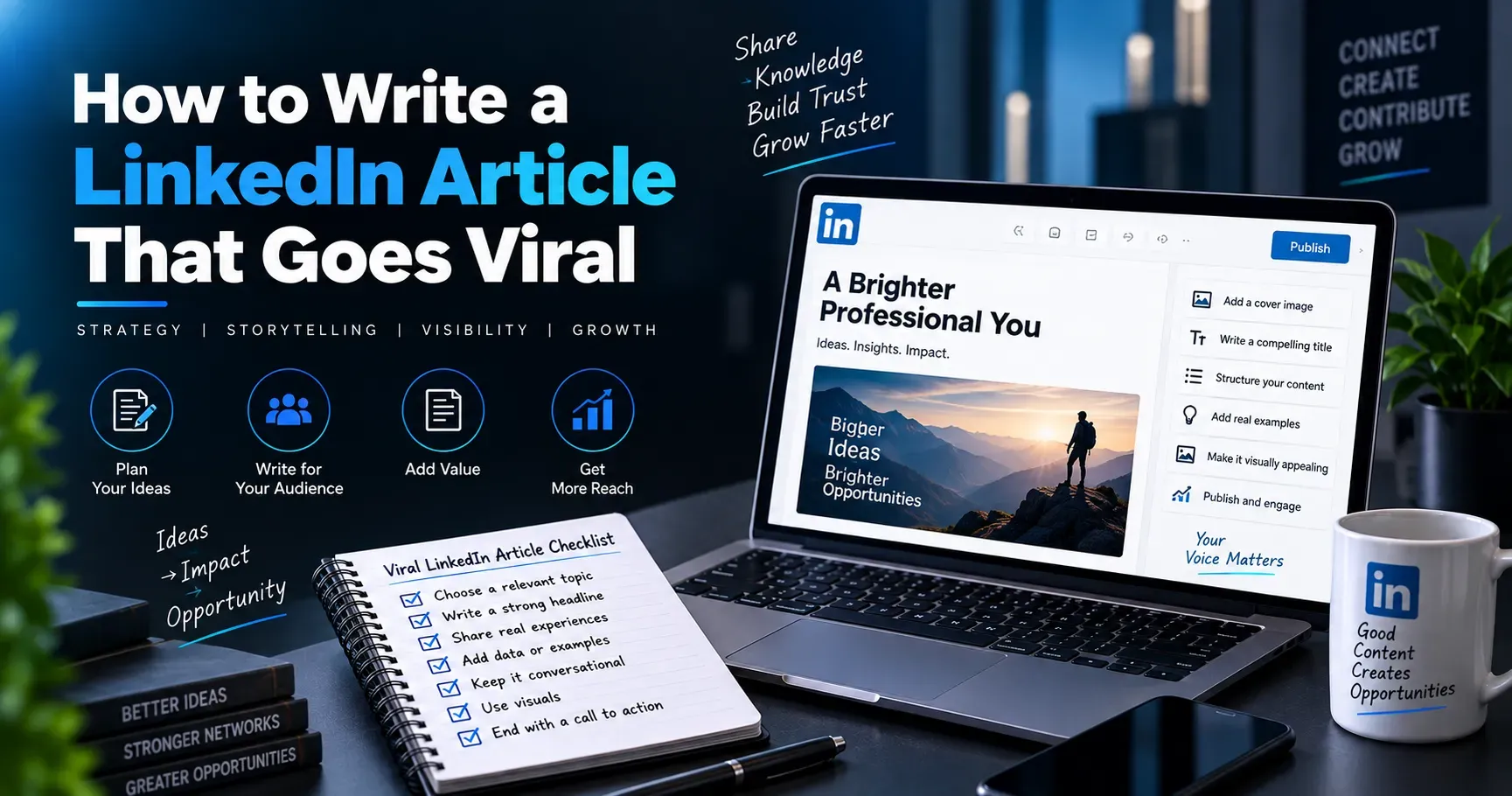
How to Write a LinkedIn Article That Goes Viral
LinkedIn has evolved well beyond a digital resume, becoming a genuine platform for building personal brand, sharing expertise and reaching a professionally engaged audience that actively seeks out valuable content. Yet most LinkedIn articles and posts quietly disappear into the feed with minimal engagement, while a select few reach hundreds of thousands of views and reshape how people perceive the author's expertise. The difference rarely comes down to luck alone. This guide explains how to write a LinkedIn article that goes viral in 2026, covering the psychology behind shareable content, structural techniques, formatting choices and the platform specific factors that genuinely influence reach.
Why Most LinkedIn Content Fails to Gain Traction
The majority of underperforming LinkedIn content shares common, avoidable problems, an opening that fails to immediately capture attention, a message that reads as generic corporate messaging rather than genuine personal insight, or content that provides no clear, specific value to the reader beyond simple self promotion of the author.
LinkedIn's algorithm and audience both reward content that generates genuine engagement within the first hour after posting, meaning content that fails to immediately hook readers rarely gets the chance to reach a wider audience regardless of how strong the underlying idea might actually be beneath the surface.
Understanding What Makes LinkedIn Content Spread
Content spreads on LinkedIn when it triggers a genuine emotional or intellectual response strong enough to make someone want to comment, share or tag a colleague, whether that response is agreement, surprise, inspiration or even respectful disagreement with the point being made.
Professional audiences on LinkedIn specifically respond well to content offering genuine, specific insight from real experience, rather than generic advice that could apply to any industry or situation without meaningful specificity. Vulnerability and authenticity, when genuine rather than performative, tend to resonate particularly strongly on a platform where most content historically leaned toward polished, corporate messaging that can feel emotionally distant from readers.
Step One: Choose a Topic With Genuine Resonance
Draw From Real, Specific Experience
The most compelling LinkedIn content typically comes from genuine personal or professional experience, a specific lesson learned, a mistake made, or an insight gained through actual work, rather than repackaged generic industry advice available everywhere else online.
Identify a Genuine Tension or Contrarian Angle
Content that respectfully challenges a common assumption or reveals an unexpected truth tends to generate significantly more discussion than content simply confirming what readers already believe or expect to hear from a post.
Consider Timeliness and Relevance
Topics connected to current industry conversations or recent events often gain additional traction, since readers are already primed to engage with subjects actively on their mind at that particular moment in time.
Step Two: Write an Opening That Genuinely Hooks Readers
Lead With Tension, Surprise or a Bold Statement
The first one or two lines determine whether someone clicks to read more, so open with something genuinely attention grabbing, whether that is a surprising statistic, a bold claim or a genuinely unexpected personal admission worth reading further into.
Avoid Generic, Predictable Openings
Skip overused opening patterns that readers have seen countless times before, since a predictable, formulaic hook rarely generates the genuine curiosity needed to encourage someone to click and continue reading further into the piece.
Create a Genuine Curiosity Gap
Structure your opening to create a genuine question in the reader's mind that the rest of the article will answer, giving them a real reason to continue reading rather than scrolling past without a second thought.
Step Three: Structure the Article for Maximum Readability
Use Short Paragraphs and Line Breaks
LinkedIn readers scan quickly, so break content into short paragraphs, often just one or two sentences, with generous white space, making the article feel approachable rather than dense and intimidating on a mobile screen where most viewing happens.
Build a Clear Narrative Arc
Structure your content with a genuine beginning, middle and end, whether that is a personal story, a problem and solution format, or a clear progression of ideas building toward a meaningful conclusion the reader can follow easily.
Include a Genuine Personal Story When Relevant
Weaving in a specific, genuine personal anecdote or experience makes content feel more relatable and memorable than purely abstract advice or observations without real grounding in something the author actually experienced.
Step Four: Deliver Genuine, Specific Value
Provide Concrete, Actionable Insight
Ensure your article delivers something genuinely useful, whether that is a specific framework, a lesson learned, or actionable advice the reader can actually apply, rather than vague inspiration without genuine substance behind it.
Support Claims With Specific Examples
Back up broader points with specific, concrete examples or details from real experience, since specificity consistently builds more credibility and engagement than generic, broadly applicable statements that feel hollow.
Avoid Overly Promotional Content
Keep direct self promotion minimal within the actual content, since articles that read as thinly veiled advertisements tend to generate significantly less genuine engagement than content genuinely focused on providing value first to the reader.
Step Five: Write a Strong, Discussion Inviting Conclusion
End With a Clear Takeaway
Summarize the core insight or lesson clearly at the end, ensuring readers walk away with a genuine, memorable understanding of your central point rather than a vague, unclear impression of what you were trying to say.
Invite Genuine Discussion
Close with a genuine question or invitation for readers to share their own experience or perspective, encouraging the comments that significantly boost algorithmic distribution and overall visibility for the post.
Formatting Techniques That Improve LinkedIn Performance
Use Strategic Emphasis Sparingly
Bold text or occasional emoji can help draw attention to key points when used thoughtfully, though overuse can make content feel cluttered or unprofessional rather than genuinely emphasized and purposeful.
Break Up Long Content With Numbered or Bulleted Lists
For content covering multiple distinct points, numbered or bulleted formatting improves scannability significantly compared to the same information presented as dense, continuous paragraphs that are hard to skim.
Keep Sentences Genuinely Conversational
Write in a natural, conversational tone rather than overly formal corporate language, since LinkedIn readers respond significantly better to content that feels like a genuine person speaking rather than a press release from a company.
Timing and Distribution Strategies
Post When Your Specific Audience Is Most Active
Review your own LinkedIn analytics to identify when your specific audience is genuinely most active, since general best practice timing recommendations may not perfectly align with your particular audience's actual behavior and habits.
Engage Actively After Publishing
Respond promptly and genuinely to early comments, since active engagement in the first hour after posting signals to the algorithm that your content is generating real interaction worth distributing more broadly to others.
Avoid Immediately Cross Posting Elsewhere
Give your LinkedIn content dedicated time to perform on the platform itself before immediately sharing the same content elsewhere, since LinkedIn's algorithm tends to favor content that appears to originate genuinely on the platform itself.
Common Mistakes That Prevent Viral Reach
Many LinkedIn articles read as generic corporate messaging rather than genuine personal insight, failing to generate the emotional or intellectual response needed for meaningful sharing among readers. Avoid overly long, dense paragraphs that discourage readers from continuing past the first few lines on a platform where scrolling behavior is fast and attention spans are genuinely limited by comparison.
Do not neglect a strong, attention grabbing opening, since even excellent content buried behind a weak hook often fails to attract the initial engagement needed to gain broader algorithmic distribution across the platform. Finally, avoid content that feels purely self promotional, since audiences respond far more strongly to genuine value and authentic insight than to thinly disguised advertising dressed up as thought leadership.
Building Consistency Beyond a Single Viral Post
While a single viral article can meaningfully boost visibility, sustainable LinkedIn growth comes from consistent, genuinely valuable content published regularly over time, rather than relying entirely on occasional viral hits that may not repeat. Building a recognizable, authentic voice and regularly showing up with genuine insight helps build a loyal, engaged following that continues to support and amplify your content, creating a stronger foundation than chasing viral moments alone without underlying consistency behind them.
Measuring Whether Your LinkedIn Content Strategy Is Working
Track engagement quality, not just raw view counts, since genuine comments and shares indicate significantly stronger content resonance than passive views alone provide as a signal. Monitor how your content performance connects to broader professional goals, such as inbound opportunities or meaningful connection requests, rather than treating viral reach as valuable purely for its own sake without deeper purpose.
Review which specific topics, formats or storytelling approaches consistently perform best with your audience, using these insights to refine your ongoing content strategy over time as you learn what genuinely resonates.
A Simple Framework for Getting Started
Begin by identifying a genuine, specific experience or insight worth sharing, ideally with some element of tension, surprise or contrarian perspective that stands out. Write an opening that genuinely hooks readers within the first one or two lines of the piece.
Structure the content with short paragraphs, a clear narrative arc and genuine personal storytelling where relevant to the point being made. Deliver concrete, actionable value supported by specific examples from real experience. Close with a clear takeaway and a genuine invitation for discussion from readers. Publish when your specific audience is most active and engage genuinely with early comments to support algorithmic distribution of the post.
Final Thoughts
Writing a LinkedIn article that genuinely goes viral requires more than simply following a formula, it demands authentic insight, genuine storytelling and careful attention to how content is structured and formatted for a fast scrolling, professionally engaged audience. By focusing on genuine value, strong hooks, clear structure and authentic voice, rather than purely promotional messaging, you significantly increase the odds that your content resonates strongly enough to spread organically. Even without guaranteed virality on any single post, consistently applying these principles throughout 2026 builds a genuinely stronger, more engaged professional presence over time.