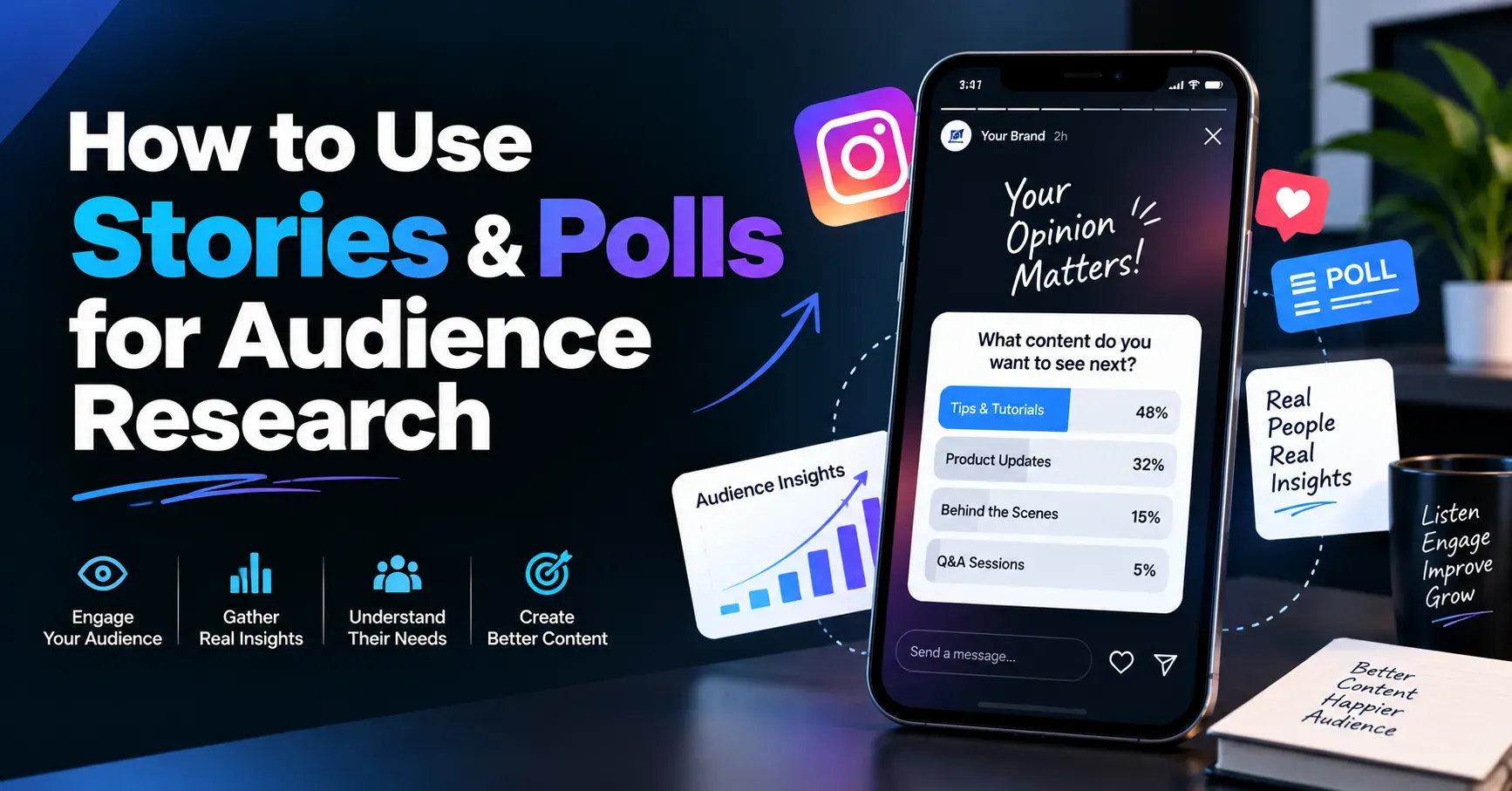
How to Use Stories and Polls for Audience Research
Traditional market research often involves expensive surveys, lengthy focus groups or paid research panels that take weeks to organize and analyze. Meanwhile, a genuinely powerful, low cost research tool sits within an app most brands already use daily. Stories and their interactive stickers, including polls, question boxes and rating sliders, offer a remarkably fast, low friction way to gather real feedback directly from an actual audience already engaged with your brand. This guide explains how to use Stories and polls for audience research in 2026, covering practical question design, interpreting results accurately and turning casual social feedback into genuinely actionable business insight.
Why Stories and Polls Work So Well for Audience Research
Traditional surveys often suffer from low response rates and selection bias, since only especially motivated people typically take the time to click through and complete a lengthy questionnaire sent to them. Stories based polls and interactive stickers remove much of this friction, requiring only a single tap to respond, which dramatically increases participation compared to a traditional survey link shared elsewhere.
This low friction format also captures feedback from people who would never complete a formal survey but are perfectly willing to tap a quick poll option while casually browsing their feed, giving you access to a genuinely broader, more representative slice of your actual audience than a formal survey alone would reach.
Types of Interactive Stickers Useful for Research
Poll Stickers
Simple two option polls are ideal for quick, binary decisions or preference checks, such as choosing between two product concepts or gauging general sentiment on a specific topic relevant to your audience and their interests.
Question Stickers
Open ended question boxes allow followers to respond with their own free text answers, providing richer, more qualitative insight than a simple poll, though requiring more effort to review and synthesize afterward once collected.
Quiz Stickers
Multiple choice quiz style stickers work well for gauging audience knowledge or preference across several specific options, rather than a simple binary choice, while still maintaining a low friction, tap to respond format that is quick.
Rating and Slider Stickers
Sliding scale stickers allow followers to indicate intensity of opinion or satisfaction along a spectrum, providing more nuanced insight than a simple yes or no response would capture from a respondent.
Designing Effective Research Questions
Keep Questions Genuinely Simple and Clear
Since Stories are consumed quickly, questions need to be immediately understandable without requiring careful re reading, so avoid complex or ambiguous phrasing that could confuse a fast scrolling viewer moving through their feed.
Ask One Clear Thing at a Time
Resist combining multiple questions into a single poll or sticker, since this creates confusion about what is actually being asked and muddies the resulting data you collect from respondents.
Frame Questions Neutrally
Avoid leading or biased phrasing that nudges respondents toward a particular answer, since genuinely useful research requires questions framed neutrally enough to capture authentic, unbiased opinion from your audience.
Consider the Order of Poll Options
Be aware that the order in which poll options are presented can subtly influence responses, so consider this when interpreting results, particularly for close or ambiguous outcomes that could go either way.
Practical Research Applications for Businesses
Testing Product Ideas Before Launch
Use polls to gauge initial interest or preference between potential product features, names or concepts, gathering quick directional feedback before committing significant resources to full development of any single option.
Understanding Content Preferences
Ask your audience directly what type of content they want more of, helping guide your ongoing content strategy based on genuine, stated preference rather than assumption alone made internally by the team.
Gauging Sentiment on Specific Topics
Use polls to quickly assess audience opinion or sentiment on relevant industry topics, trends or company announcements, providing a real time pulse check on how your community genuinely feels about a given subject.
Identifying Pain Points and Frustrations
Use question stickers to directly ask your audience about specific challenges or frustrations they experience related to your product category, surfacing genuine pain points that could inform future development priorities.
Validating Assumptions With Real Data
Rather than relying purely on internal assumptions about audience preferences or behavior, use polls and questions to directly validate or challenge those assumptions with genuine, real time audience input gathered directly.
Building a Consistent Audience Research Habit
Incorporate Research Questions Regularly
Rather than treating audience research as an occasional, special event, build regular polls and questions into your ongoing content calendar, creating a consistent habit of listening that produces richer data over time and use.
Vary Question Types and Topics
Mix different sticker types and question topics over time, avoiding repetitive, predictable research patterns that could reduce genuine audience engagement and participation in your polls over the long run.
Share Results Back With Your Audience
When appropriate, share poll results or how audience feedback directly influenced a decision, demonstrating that responses are genuinely valued and encouraging continued future participation from your community going forward.
Interpreting Stories and Poll Data Accurately
Recognize the Limits of Sample Representativeness
Remember that Stories viewers and poll respondents represent your most engaged followers rather than your entire potential audience, so interpret results as directional insight from engaged fans rather than a fully representative sample of your total market and customer base.
Look for Patterns Across Multiple Polls
Rather than drawing significant conclusions from a single poll result, look for consistent patterns across multiple related questions and over time, building more confident insight from repeated, converging signals gathered over months.
Combine Quantitative and Qualitative Data
Pair simple poll results with open ended question responses where possible, combining the breadth of quick poll data with the depth of qualitative insight to build a more complete picture of audience sentiment and motivation.
Consider Timing and Context
Account for when a poll was conducted and any relevant surrounding context, such as recent news or events, since timing can meaningfully influence responses in ways that might not reflect a stable, ongoing sentiment over time.
Common Mistakes When Using Stories for Research
Many brands ask overly leading or biased questions, inadvertently skewing results toward a predetermined conclusion rather than capturing genuine audience opinion honestly. Avoid over interpreting results from a single poll with a small response count, since limited data can be misleading if treated as definitively representative of broader audience sentiment across your whole base.
Do not neglect to actually act on insights gathered, since collecting feedback without genuine follow through can eventually reduce audience willingness to participate in future research efforts down the road. Finally, avoid relying exclusively on Stories based research for major, high stakes business decisions, since this format works best as a directional, low cost complement to more rigorous research methods rather than a complete replacement for them entirely.
Combining Stories Research With Other Methods
While Stories and polls offer valuable speed and accessibility, combining this approach with other research methods, such as more detailed surveys, customer interviews or formal usability testing, produces a more complete, reliable picture for significant decisions that matter most to the business.
Use Stories based research for quick, directional insight and ongoing audience pulse checks, reserving more rigorous, formal research methods for higher stakes decisions where genuinely representative, statistically reliable data matters most to the outcome and its consequences.
A Simple Framework for Getting Started
Begin by identifying a specific, clear question you genuinely want to understand about your audience and their preferences. Choose the appropriate sticker type based on whether you need a quick binary response, multiple choice preference or open ended qualitative insight from respondents.
Write the question in simple, neutral, unambiguous language that anyone can understand quickly. Incorporate research questions regularly into your ongoing content calendar rather than treating it as an occasional exercise done rarely. Look for patterns across multiple related polls over time rather than over interpreting any single result in isolation. Share relevant results back with your audience when appropriate, and ensure genuine insights actually inform subsequent decisions made by the team.
Final Thoughts
Stories and polls offer a genuinely fast, low cost way to gather real feedback directly from an engaged audience, complementing more traditional, formal research methods rather than fully replacing them entirely. By designing clear, neutral questions, building a consistent research habit, and interpreting results with appropriate awareness of their limitations, brands can use this accessible tool to make more informed, audience grounded decisions throughout 2026. When combined thoughtfully with other research approaches for higher stakes decisions, Stories based audience research becomes a genuinely valuable, ongoing part of understanding what your community actually thinks and wants.