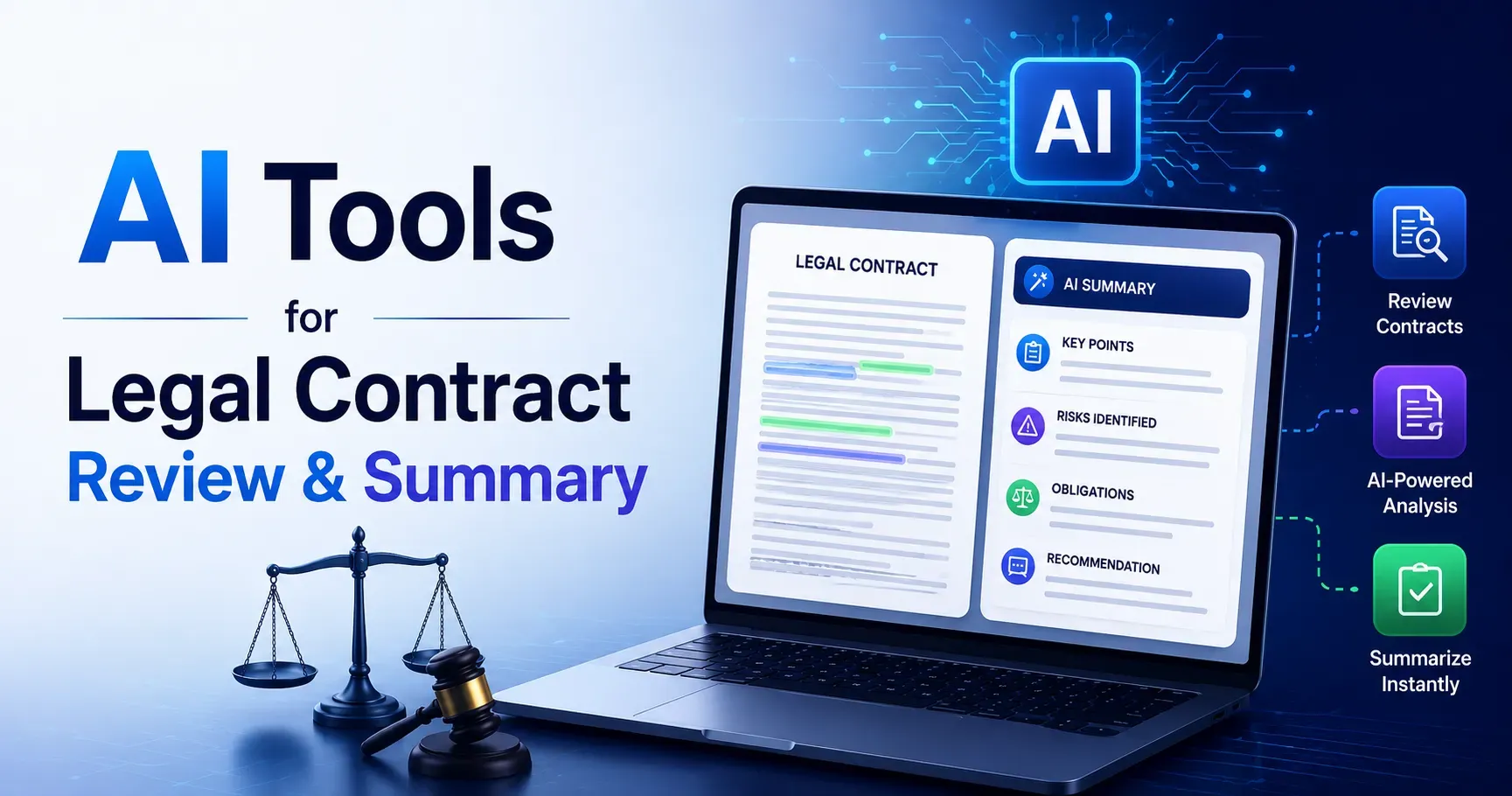
AI Tools for Legal Contract Review and Summary
Contracts govern nearly every meaningful business relationship, yet reading through dense legal language, identifying risky clauses and comparing terms across multiple agreements remains one of the most time consuming tasks legal and business teams face. In 2026, AI tools have become genuinely capable of speeding up this process, extracting key terms, flagging potentially risky language and generating plain language summaries that make contracts significantly more approachable, even for non lawyers. This guide explains how AI tools for legal contract review and summary work, where they add the most value, and how to use them responsibly alongside genuine legal expertise.
Why Contract Review Has Traditionally Been Slow and Costly
Thorough contract review requires careful, line by line reading, cross referencing terms against company policy or industry standards, and identifying subtle language that could create meaningful risk down the line. This process demands significant time from qualified legal professionals, whose availability and hourly cost make manual review of every single contract impractical for many organizations, particularly smaller businesses without dedicated in house legal teams.
As business relationships and contract volume have grown, manual review alone has become increasingly difficult to sustain without either significant delays or meaningfully increased legal costs for the organization overall.
How AI Contract Review Tools Actually Work
AI contract tools use natural language processing to read and analyze contract text, identifying key elements such as parties involved, payment terms, termination clauses, liability provisions and other standard contract components automatically without manual searching.
More advanced tools compare specific language against known risk patterns or your organization's preferred contract standards, flagging clauses that deviate from expected terms or that historically correlate with genuine legal or business risk. Many tools also generate plain language summaries of lengthy, complex contracts, translating dense legal terminology into a format that business stakeholders without legal training can genuinely understand and act on.
Key Capabilities of AI Contract Review Tools
Automated Clause Extraction
These tools automatically identify and extract key clauses, such as termination conditions, payment terms or confidentiality provisions, saving significant time compared to manually locating these specific elements within a lengthy document by hand.
Risk Flagging and Anomaly Detection
AI tools can flag language that deviates from standard, expected terms or that historically correlates with risk, drawing attention to specific clauses that genuinely warrant closer human review rather than requiring equal scrutiny across an entire document line by line.
Plain Language Summarization
These tools generate concise, accessible summaries of lengthy contracts, helping business stakeholders quickly understand key terms and obligations without needing to read the entire original document in full legal language and jargon.
Contract Comparison and Redlining
AI tools can compare a new contract against a standard template or previous version, automatically highlighting specific changes and deviations, significantly speeding up the review of contract revisions during negotiation and back and forth.
Obligation and Deadline Tracking
Some tools extract key dates, deadlines and ongoing obligations from contracts automatically, feeding this information into calendar or contract management systems to help ensure important commitments are not accidentally missed by anyone.
Practical Use Cases for AI Contract Tools
Vendor and Supplier Agreement Review
Use AI tools to quickly review routine vendor contracts, flagging any terms that deviate from standard expectations and allowing legal review time to focus specifically on agreements involving genuinely higher risk or unusual terms worth deeper attention.
Employment Contract Review
AI tools can help summarize and flag key terms within employment agreements, supporting consistency across offers while helping identify any unusual clauses that warrant closer human attention before finalizing an offer to a candidate.
Non Disclosure Agreement Processing
Given the high volume and relatively standardized nature of many non disclosure agreements, AI tools can efficiently review and flag deviations from standard language, significantly speeding up this common, repetitive task for legal teams.
Lease and Real Estate Agreement Analysis
AI tools can help extract and summarize key terms within lease agreements, such as payment obligations, renewal terms and specific restrictions, making these often lengthy documents more approachable for business decision makers involved.
Due Diligence During Mergers and Acquisitions
AI tools can accelerate the review of large volumes of contracts during due diligence processes, helping identify contracts with unusual terms, change of control provisions or other elements requiring closer legal attention during a transaction.
How to Integrate AI Contract Tools Into Your Workflow
Start With Higher Volume, Lower Complexity Contracts
Begin applying AI contract review to routine, relatively standardized agreements, such as common vendor contracts or non disclosure agreements, before expanding into more complex, higher stakes agreement types that need closer scrutiny.
Establish Clear Escalation Criteria
Define specific triggers that route a contract to full human legal review, such as unusual flagged terms, high contract value or agreements involving significant liability, ensuring AI screening genuinely complements rather than bypasses qualified legal judgment on important matters.
Customize Tools to Your Organization's Standards
Where possible, configure AI tools with your organization's specific preferred contract language and risk tolerance, improving the relevance and accuracy of flagged issues for your particular business context and preferences.
Maintain Regular Human Quality Checks
Periodically review a sample of AI processed contracts against full manual review, helping verify the tool's ongoing accuracy and catch any systematic gaps in its analysis before they become a recurring, unnoticed problem across many contracts.
Understanding the Limitations of AI Contract Review
AI contract tools identify patterns based on training data and configured rules, meaning they can miss genuinely novel contract structures, unusual industry specific language or subtle context that a human legal professional would recognize immediately upon reading it themselves.
These tools are not a substitute for qualified legal advice, particularly for complex, high value or genuinely unusual agreements where nuanced judgment and specific legal expertise remain essential to proper review. Over reliance on automated flagging without adequate human oversight can create a false sense of thoroughness, especially for contracts involving significant financial or legal exposure that deserve careful, dedicated human attention regardless of what an AI tool flags or does not flag.
Choosing the Right AI Contract Review Tool
Consider Your Specific Contract Types and Volume
Evaluate tools based on how well they handle the specific types and volume of contracts your organization regularly processes, since capability and accuracy can vary significantly depending on contract complexity and industry specific language used.
Assess Integration With Existing Systems
Choose tools that integrate smoothly with your existing contract management, document storage and workflow systems, since a disconnected tool requiring significant manual data transfer reduces overall efficiency gains achieved.
Evaluate Accuracy and Explainability
Look for tools that clearly explain why a specific clause was flagged, rather than providing opaque risk scores without genuine context, since understanding the reasoning behind a flag helps reviewers make more informed, efficient decisions quickly.
Review Data Security and Confidentiality Practices
Since contracts often contain highly sensitive business information, carefully review any AI tool's data security certifications and confidentiality policies before uploading proprietary or sensitive contract content for analysis by the system.
Building a Balanced Human AI Contract Review Process
The most effective approach combines AI efficiency with genuine legal expertise, using AI to handle the initial, time consuming work of reading, extracting and flagging, while reserving qualified human legal judgment for interpreting ambiguous language, negotiating terms and making final decisions on genuinely significant agreements that matter most.
This balanced approach allows legal teams to review a significantly higher volume of contracts efficiently while still ensuring the most consequential agreements receive the careful, expert human attention they genuinely require and deserve.
Common Mistakes When Implementing AI Contract Tools
Many organizations implement AI contract review tools without adequately training staff on how to interpret and act on flagged issues, leading to either dismissed warnings or unnecessary delays in the review process that slow things down. Avoid treating AI summaries as a complete substitute for reading the full original contract on genuinely significant or high value agreements, since summaries, while useful, can occasionally miss important nuance present in the original language used.
Do not neglect regular tool calibration as your organization's contract standards evolve, since a tool trained on outdated preferences can create inaccurate or irrelevant flagging over time as things change. Finally, avoid implementing these tools in isolation from your legal team, since their input on configuration and escalation criteria significantly improves overall tool effectiveness and trust from the people who will use it daily.
A Simple Framework for AI Assisted Contract Review
Begin by identifying your highest volume, most routine contract types as an initial application area for AI review tools within your organization. Select a tool that handles your specific contract types well and integrates smoothly with existing systems already in use.
Configure the tool with your organization's specific standards and risk tolerance where possible. Establish clear escalation criteria for routing higher risk or higher value contracts to full human legal review. Train your team on interpreting AI generated flags and summaries appropriately. Regularly audit tool accuracy and recalibrate configuration as your organization's needs and standards continue to evolve over time.
Final Thoughts
AI tools for legal contract review and summary offer genuine, meaningful efficiency gains, helping teams process higher volumes of contracts faster while freeing up qualified legal professionals to focus their attention on the most complex, consequential agreements that truly need it. However, these tools work best as a meaningful complement to genuine legal expertise rather than a complete replacement for it, particularly for contracts involving significant risk or complexity. This article provides general informational content only and should not be treated as legal advice, so businesses should consult qualified legal counsel for guidance specific to their particular contracts and circumstances.