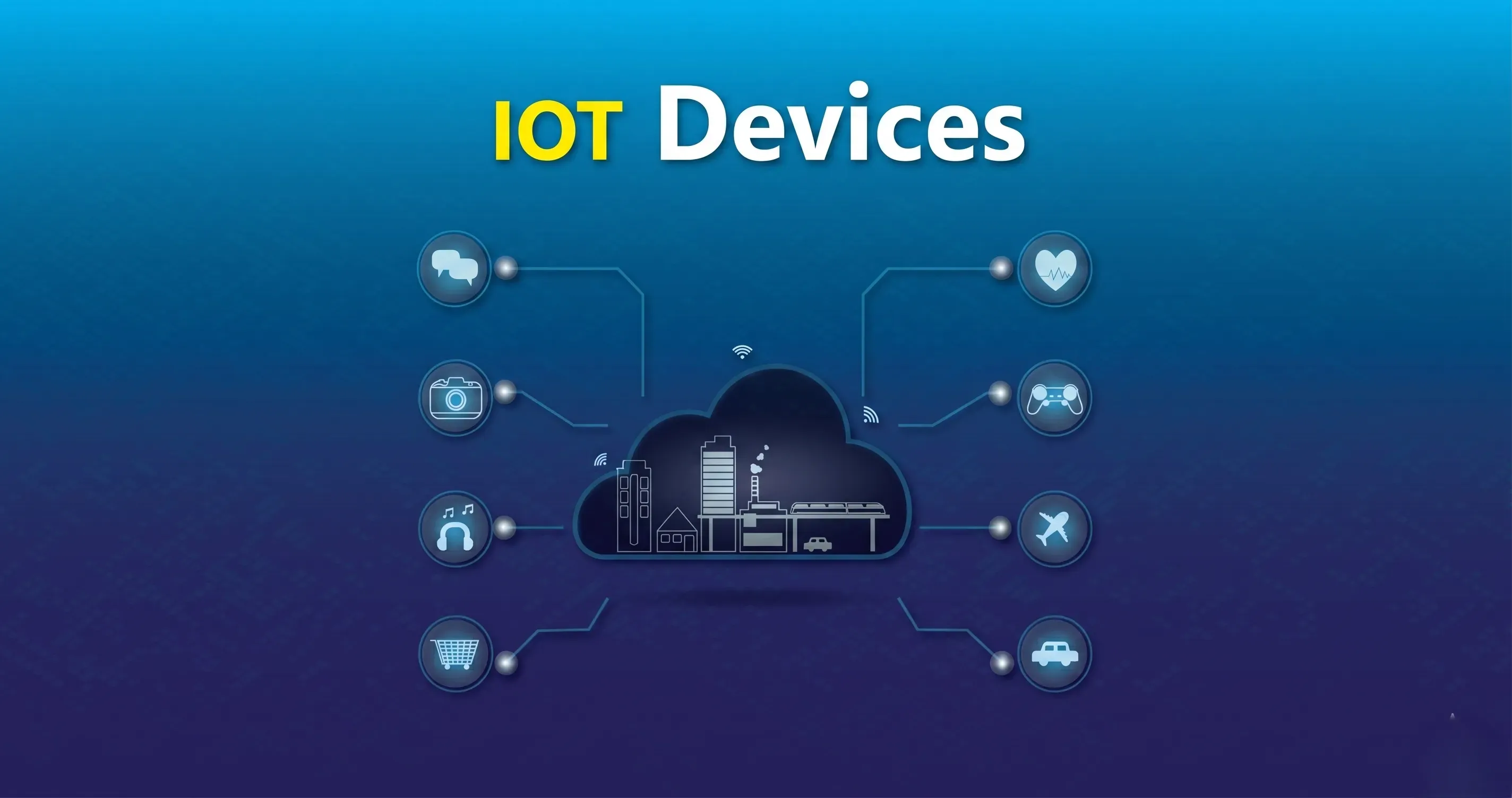
IoT Devices That Can Automate Your Life in 2026: The Complete Guide
Introduction
The promise of a home that knows what you need before you ask has been the marketing pitch for smart home technology for over a decade. In 2026, that promise is finally becoming reality.
The landscape of smart home automation has transformed dramatically, with artificial intelligence taking centre stage in creating truly intelligent living spaces. Today's AI-powered systems go beyond simple voice commands or scheduled routines. They analyse usage patterns, predict preferences and automatically adjust settings to optimise comfort whilst reducing energy consumption. This evolution represents a fundamental shift from reactive to proactive home management.
AIoT combines AI's learning ability with IoT's connectivity. In smart homes, it means devices can understand behaviour, make decisions, and automate tasks without manual control. AI uses the data collected by IoT sensors to learn your habits and adjust systems like lighting, temperature, or security automatically. It turns basic automation into intelligent decision-making.
In 2026, appliances will not only work according to schedules. They will also predict customer preferences based on behavioural patterns and anticipate needs before they arise. The idea of a smart home has expanded into a fully equipped, functional ecosystem.
This guide covers the IoT devices that are genuinely automating daily life right now, organized by category, with honest assessments of what works brilliantly, what is still maturing, and how to build a connected home that actually improves your life rather than just adding complexity.
The Foundation: Why 2026 Is the Year Smart Homes Actually Work
One word explains why smart home technology has finally moved from frustrating fragmentation to cohesive automation: Matter.
Matter is an open, royalty-free connectivity standard developed by the Connectivity Standards Alliance, designed to unify fragmented smart home ecosystems. Where past smart homes had silos including Apple, Amazon, Google, and Samsung, Matter gives devices a shared language. Today, systems can unify different brands that could not communicate before by using a single protocol.
Matter 1.3 certification ensures devices can communicate seamlessly across platforms, allowing a Philips Hue bulb to sync with a Nest thermostat without hubs. AI edge processing enhances privacy, analysing data locally without cloud storage. Smart home devices in 2026 are smarter, faster, and more connected than ever thanks to AI and Matter support.
Thread is a mesh network protocol designed for low-power IoT devices. Unlike Wi-Fi or Bluetooth, Thread creates a resilient mesh that keeps devices responsive even if one fails. With broad adoption from major OS makers and chipset vendors, Thread is transitioning from niche to default smart home infrastructure.
The practical result for anyone building or upgrading a smart home in 2026 is that the question of compatibility has become much simpler. Look for Matter-certified devices and they will work across Apple Home, Amazon Alexa, Google Home, and Samsung SmartThings simultaneously. That single shift unlocks automation possibilities that were previously impossible without extensive technical setup.
Smart Climate Control: Thermostats and Air Quality
AI-Powered Smart Thermostats
These sophisticated systems can predict when you will arrive home, adjust temperature settings based on weather forecasts and even modify lighting schedules according to seasonal changes. The integration of machine learning algorithms means your home becomes more intuitive over time, creating personalised experiences that adapt to your lifestyle.
Thermostats like Ecobee's Eco+ deliver real-time weather-aware comfort. AI-powered IoT systems are reshaping energy efficiency in ways that earlier programmable thermostats could never achieve.
Google Nest Learning Thermostat and Ecobee SmartThermostat are the two most capable options in 2026. Both have moved beyond schedule-based programming into genuine behavioral learning. They observe when you wake, when you leave, when you return, and what temperature you consistently adjust to throughout the day and night, then apply those patterns automatically without any manual programming.
Smart thermostats pre-heat or cool homes based on routines, potentially saving $150 yearly on utilities according to DOE efficiency estimates. Smart thermostats learn routines, adjusting heating and cooling to reduce unnecessary energy use.
The automation that saves the most money is geofencing: when you leave a defined radius around your home, the thermostat shifts to an energy-saving mode automatically. When you approach home, it returns to your comfort temperature so the house is perfect when you walk in. No manual adjustment required.
Smart Lighting: Beyond Voice Control
When you wake up, your favorite playlist starts automatically. Lights adjust to the perfect brightness for your morning. Your coffee machine begins brewing just as you enter the kitchen. AI quietly studies your preferences and creates a space that feels designed just for you.
Intelligent lights dim with your mood. AI is reshaping everyday living through ambiance automation that responds to context rather than explicit commands.
Smart lighting in 2026 has evolved beyond the novelty of voice-controlled bulbs into a genuinely useful automation layer. The most practical applications are automated scenes: morning scenes that gradually brighten to ease you awake, work-from-home scenes that optimize light for screen work and reduce eye strain, evening scenes that shift to warmer tones to support natural melatonin production, and night scenes that activate at minimal brightness when motion is detected after midnight.
Philips Hue remains the premium lighting ecosystem with the deepest automation capabilities and broadest compatibility. Nanoleaf offers creative lighting installations alongside standard bulbs and is fully Matter-compatible. For budget-conscious setups, Wyze and IKEA Trådfri both offer Matter-compatible smart bulbs at accessible price points that deliver the practical automation benefits without premium pricing.
The most underused smart lighting automation is occupancy-based control. Paired with smart motion sensors, lights activate when you enter a room and turn off automatically when you leave. For spaces you routinely forget to turn off lights in, the energy savings alone justify the investment within a year.
Smart Security: Cameras, Locks, and Monitoring
AI-Powered Security Cameras
Live video monitoring through connected cameras presents video feeds in real time and sends motion alerts. More sophisticated ones have features like night vision and AI detection. They not only upgrade a home's security but also give the owner the ability to perform remote surveillance.
Smart security systems like Ring and Eufy reduce false alarms with object recognition and automatic door unlocking based on proximity. AI detection means cameras distinguish between a person, a vehicle, a pet, and a blowing branch, sending alerts only when the detection matches what you actually care about.
The reduction in false alarms from AI-powered cameras is one of the most practically impactful improvements in smart home security. Earlier motion-triggered cameras sent dozens of notifications daily for passing cars, animals, and wind-blown foliage. Modern cameras with computer vision understand context: a person approaching your front door at 2 AM triggers an alert, a squirrel crossing your garden does not.
Smart Locks
Smart locks and access systems are focusing on frictionless security with less app involvement, more automatic engagement, and multi-factor triggers, proximity detection, and interoperable identity systems without burdening users.
Security systems for doors that do not require physical keys. With smart locks, people can open their doors using a mobile app or a code. Smart locks can keep access logs and even be controlled remotely, providing both more security and convenience.
The most useful smart lock feature for daily life is auto-lock and auto-unlock based on phone proximity. Your door unlocks as you approach and locks automatically when you leave. For families with children, temporary access codes for school-age kids and notifications when they arrive home represent a genuine improvement in both security and peace of mind. Schlage, August, and Yale all offer Matter-compatible smart locks in 2026 that work across every major platform ecosystem.
Standards like Aliro aim to unify access control across brands using NFC and Ultra-Wideband. Phones become universal keys for doors, gates, cars, and common spaces. Cross-brand digital keys enable device-agnostic access, important for renters, multi-family buildings, and mixed ecosystems.
Smart Video Doorbells
A smart video doorbell replaces the standard doorbell with a camera that identifies who is at your door from anywhere, allows two-way communication whether you are home or not, and integrates with smart locks to allow remote entry for trusted visitors. Ring, Arlo, and Eufy all offer video doorbells with AI person detection, package detection, and visitor announcement in 2026.
Smart Home Hubs and Voice Assistants
The hub layer is getting smarter. Instead of a single brand-locked box, hubs are becoming software platforms or network-anchored systems that coordinate devices and handle automation. Consumers now expect automation to work even without the cloud, with security and privacy baked in.
Smart home control moves beyond push-button commands to conversational AI. Advances in generative AI and local model processing mean assistants can understand complex requests, context switches, and multi-device automation.
The shift to conversational AI control is significant for usability. Instead of memorizing specific command syntax for each device, you can say something like set the house to movie mode and have the system dim the lights, close the blinds, and adjust the temperature simultaneously based on a configured scene. More practically, you can say something went wrong last night and have the system surface security camera footage from the relevant time period rather than requiring you to navigate multiple apps.
Amazon Echo, Google Nest Hub, and Apple HomePod all serve as capable hub devices in 2026, with each better suited to its own ecosystem. For households using mixed ecosystems, Matter-compatible devices remove the requirement to commit to a single hub.
Smart Cleaning: Robotic Vacuums and Beyond
Robotic vacuums are now household staples. Vacuums like the Roomba Combo j9+ dodge obstacles and even pet mess proactively. AI is reshaping everyday living through intelligent cleaning automation.
IoT home devices like robot vacuum-mop combos reduce cleaning time by up to 70 percent, freeing evenings for other tasks.
Modern robotic vacuums have made three critical leaps over their earlier versions. Obstacle avoidance is now reliable enough to navigate rooms with scattered objects, pet toys, and power cords without getting stuck. Multi-floor mapping stores separate plans for every level of your home and applies them automatically. Automatic emptying stations mean the vacuum can run for weeks without manual intervention, depositing its collection into a larger base station that is emptied only once or twice a month.
The most practical automation for robot vacuums is schedule plus room targeting: program the living room to vacuum daily, bedrooms every other day, and the kitchen three times per week based on actual cleaning requirements in each space. Pair with a smart door sensor or presence detection so the vacuum runs while the house is empty and returns to its station before you arrive home.
Smart Kitchen Appliances
While smart appliance enthusiasm is cooling slightly, smart appliance revenue is expected to reach roughly $68.7 billion in 2025, growing at a compound annual growth rate of 9.8 percent through 2029. The market sees cautious refining as users and brands wrestle with utility versus gimmick.
This honest assessment matters. Not every connected kitchen appliance justifies its smart premium. The ones that genuinely add automation value in 2026 are specific.
Smart coffee makers with app scheduling are genuinely useful: the coffee is ready when you wake up, brewed on a schedule that adjusts for your calendar, and can be started remotely when you are heading home. Instant, Hamilton Beach, and Breville all offer connected machines in this category.
Smart ovens and cooking devices with temperature sensors allow remote monitoring and automatic shut-off, which addresses the most common kitchen automation need: not burning dinner while doing something else. Tovala and similar subscription-enabled smart ovens take this further by downloading cooking programs for specific meals automatically.
Smart plugs deserve special mention as the most accessible entry point into home automation. By adding a smart plug to any conventional appliance, you gain scheduling, remote control, and energy monitoring without replacing the appliance. A standard coffee maker with a smart plug that activates at 7 AM is functionally equivalent to a smart coffee maker at a fraction of the cost.
Smart Energy Monitoring
Energy monitoring tells you exactly how much energy your IoT devices are using. This is really useful for smart thermostats and plugs connected to appliances.
New-generation sensors can significantly impact power bills by cutting power consumption to a minimum based directly on usage levels at a given time.
Whole-home energy monitors like Sense and Emporia Vue clip onto your home's electrical panel and use machine learning to identify the energy signature of individual appliances. Within a few weeks of learning your home's patterns, they tell you which appliances are consuming the most energy, when energy use spikes, and what the estimated cost of each device's operation is. This data typically reveals two to three appliances that are consuming far more energy than their owners realized.
Standards like Matter are starting to officially include EV chargers, meaning future smart home hubs can prioritise and automate charging alongside HVAC, lighting, and storage. EV chargers that integrate with smart home systems can shift charging to off-peak electricity rate windows automatically, reducing charging costs significantly for households with time-of-use electricity pricing.
Smart Health and Wellness Devices
IoT has moved from home comfort into personal health in meaningful ways in 2026. Smart sleep tracking devices like the Withings Sleep Analyzer, sleep-tracking rings like the Oura Ring, and smart scales that track multiple body composition metrics all feed data into health platforms that build longitudinal pictures of your health trends.
The most practical health IoT automation involves sleep optimization: smart devices can monitor sleep stages, temperature in the bedroom, and time of waking, then automatically adjust lighting, temperature, and alarms to align with your natural sleep cycles. A sunrise alarm that gradually brightens lighting twenty minutes before your alarm sounds is one of the most consistently reported quality-of-life improvements among smart home owners.
Air quality monitors from companies like Airthings and Eve detect CO2 levels, humidity, volatile organic compounds, and radon, triggering ventilation automation when indoor air quality degrades below healthy thresholds. In homes with significant outdoor air quality variation, these sensors can automate window closures and air filtration adjustments based on both indoor and outdoor conditions.
Privacy and Security: What You Need to Know
A 2024 academic study highlighted concerns around unauthorized data access, especially from smart cameras, locks and doorbells. Researchers noted widespread fears of biometric data collection, facial recognition misuse and device hijacking. Customers are afraid of smart home gadgets because of protection of personal data and feel perhaps they are spying on them. Although organizations gradually switch to stronger encryption and local processing, they are still not transparent. There are lots of people who do not know how much their smart TV or thermostat knows and where this information is exported.
Modern smart homes use edge computing and local data processing, which means most private data stays inside your home network instead of going to the cloud. Your smart security camera can recognise motion or faces without sending footage to external servers. That means your data stays safe inside your home.
Practical privacy practices for smart home owners include preferring devices that process data locally rather than uploading to cloud servers, using a dedicated IoT network segment on your router that is separate from your primary devices, regularly auditing which apps have access to which devices, enabling two-factor authentication on all smart home platform accounts, and reviewing privacy settings when any device receives a firmware update.
How to Build Your Smart Home System Strategically
Smart home automation platforms accommodate various budgets through modular approaches. Beginning with essential components allows you to experience benefits immediately whilst planning future additions. Consider long-term value when comparing options. Higher initial investment in quality components often provides better reliability, enhanced features and superior integration capabilities.
The most common smart home building mistake is purchasing devices from multiple disconnected ecosystems that cannot automate together. Before purchasing any device, verify it carries Matter certification or native integration with your chosen primary platform. The few additional dollars for a Matter-certified device versus a non-compatible alternative pays dividends in the automation possibilities it unlocks.
Start with the devices that address your most frequent friction points. If energy costs are your primary concern, start with a smart thermostat and smart plugs with energy monitoring. If security is your concern, start with a video doorbell and smart lock. If time savings are the priority, start with a robotic vacuum. Build from that foundation one category at a time rather than purchasing every device category simultaneously.
Conclusion
The most interesting thing about smart homes in 2026 is how little they look like technology showcases. There are fewer visible devices and more embedded systems. Intelligence now lives in standards, networks and software layers that sit quietly behind the walls. Smart homes are evolving into cohesive ecosystems that prioritise experience over spectacle.
The smart home narrative has matured. We are shifting away from flashy demos to practical, user-centric intelligence, particularly in energy efficiency and convenience. The real winners are those technologies making everyday life easier, safer and cheaper.
The IoT devices worth investing in right now are the ones solving real problems in your specific household: wasted energy from heating and cooling an empty home, the security gap of not knowing who is at your door, the time cost of manual cleaning cycles, and the friction of managing multiple unconnected systems. Start with those and build outward. The smart home that actually improves your life is not the most complex one. It is the one built thoughtfully around how you actually live.