How to Build a Social Media Content Strategy From Scratch
Introduction
Most businesses are active on social media. Far fewer have a strategy. There is a critical difference between showing up and showing up with purpose, and in 2026, that gap has never been more expensive to ignore.
As of early 2025, 5.24 billion people, nearly 64% of the global population, are active on social media. That is not just reach. That is an opportunity. SocialPilot And yet the majority of brands are still posting without a clear plan, chasing trends without clarity, and burning resources on platforms that never convert.
71% of marketers say social media delivers measurable ROI, up from 63% just two years ago. The difference between brands seeing returns and those burning budget? A documented strategy. Neal Schaffer
This guide is built for anyone starting from zero: a founder launching a brand, a marketer inheriting a neglected account, or a growing team ready to treat social media as a genuine business channel. Follow these steps in order and you will have a complete, actionable social media content strategy by the time you reach the end.
Step 1: Define Your Goals Before You Post Anything
Start With Business Outcomes, Not Platform Metrics
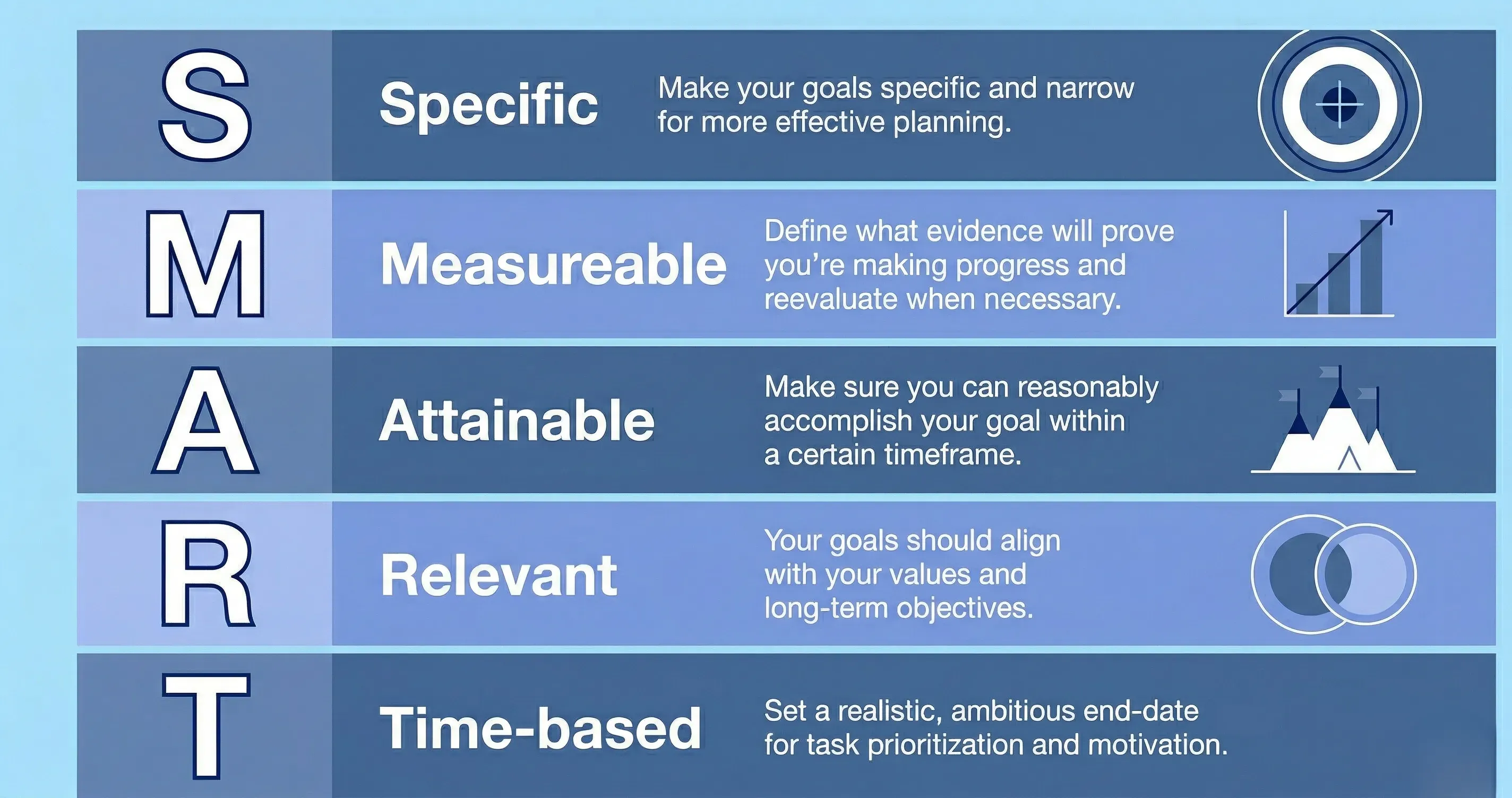
The single biggest mistake brands make is treating social media goals and business goals as separate things. They are not. Every social media objective should trace back directly to something the business actually cares about: revenue, customer acquisition, retention, brand awareness in a new market, or support cost reduction.
Before deciding what to post, when to post, or where to post, write down answers to three questions. What does success look like for this business in six months? What role can social media realistically play in achieving that? How will we know if it is working?
A successful social media strategy starts with clear goals. Whether your objective is brand awareness, lead generation, or sales, every action should align with measurable outcomes. Defining Key Performance Indicators such as engagement rate, click-through rate, and conversion rate helps track progress and optimize campaigns effectively. My Blog Poster
Choose the Right KPIs for Your Goal
Not all metrics are created equal. Vanity metrics like follower count feel good but rarely indicate business health. Tie your KPIs to the goal at hand.
If your goal is brand awareness, track reach, impressions, and share of voice. If your goal is community building, track comments, saves, and direct message volume. If your goal is lead generation, track click-through rate, landing page conversions, and cost per lead from paid social. If your goal is sales, track social commerce revenue, add-to-cart events from social traffic, and return on ad spend.
Write these down. A strategy without defined measurement criteria is just a content calendar with good intentions.
Step 2: Know Your Audience Better Than They Know Themselves
Build Real Audience Personas
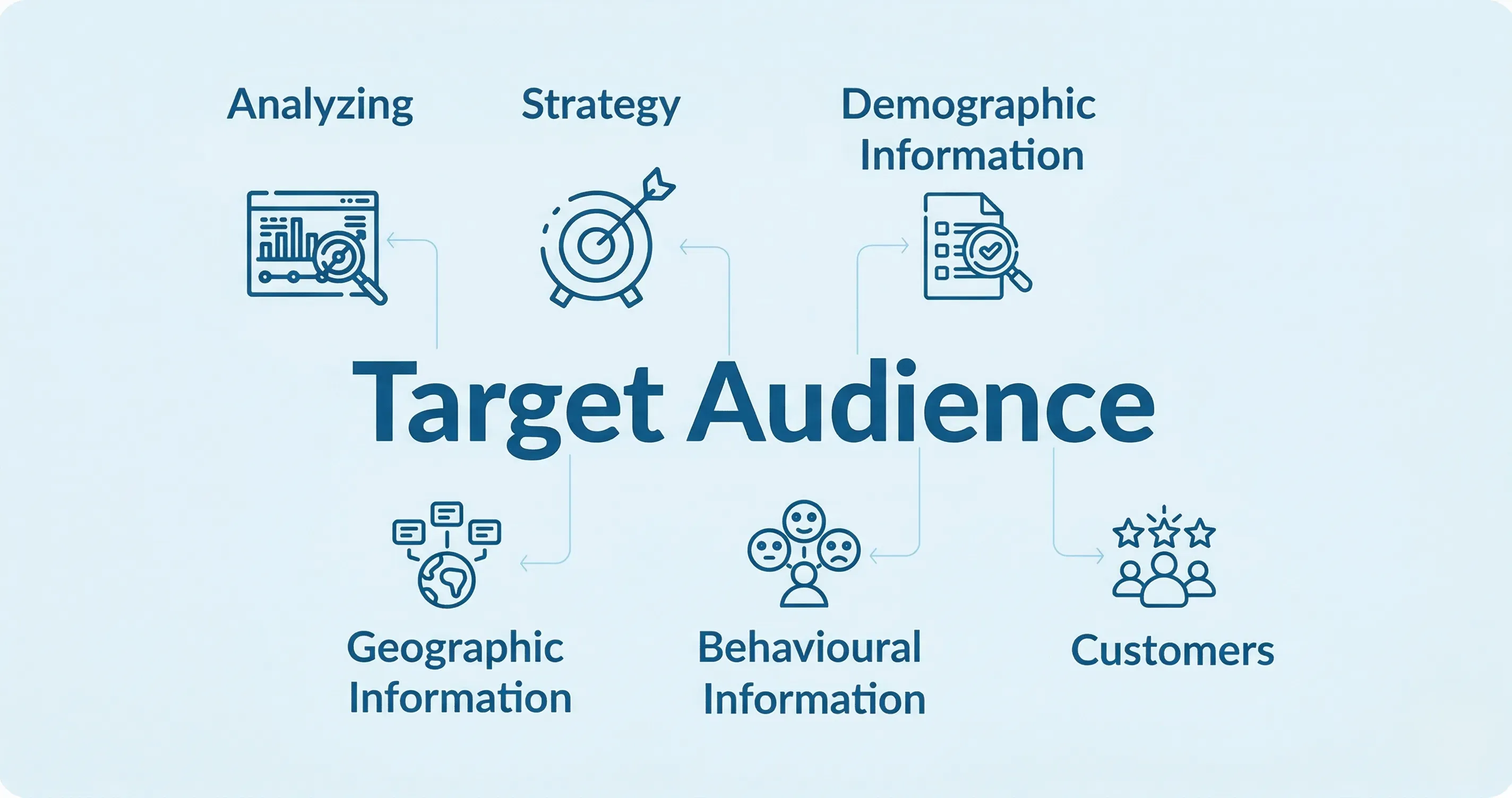
Audience research is not a one-time task. It is an ongoing discipline that sharpens every content decision you make. Understanding demographics, interests, behaviors, and pain points allows you to create content that resonates deeply. The more you understand your audience, the more personalized and effective your campaigns will be. My Blog Poster
Start with the data you already have. If you have an existing social presence, your platform analytics will tell you the age, gender, location, and active hours of your current followers. If you are starting from zero, look at your existing customer database, survey recent buyers, and study the audiences of your closest competitors.
Create detailed fictional representations of your ideal customers. Give them names, jobs, hobbies, and even frustrations. These personas will guide every content decision you make. When you are about to post something, ask yourself: Would this person find this valuable? If not, reconsider. Neal Schaffer
Understand How Your Audience Uses Social in 2026
Platform behavior has shifted significantly. The social media landscape in 2026 is restructuring. The dominant shift is from broadcasting to belonging: audiences now use social platforms as search engines, commerce hubs, and community spaces simultaneously. Pravaah Consulting
Over 60% of product discovery now happens on social platforms, and among Gen Z, 41% turn to social media before Google when looking for information. The shift is generational and accelerating. Pravaah Consulting
This means your content needs to work harder than ever. A post is no longer just a post. It is a search result, a product page, a trust signal, and a community touchpoint all at once.
Step 3: Conduct a Social Media Audit
Know Where You Stand Before You Plan Where to Go
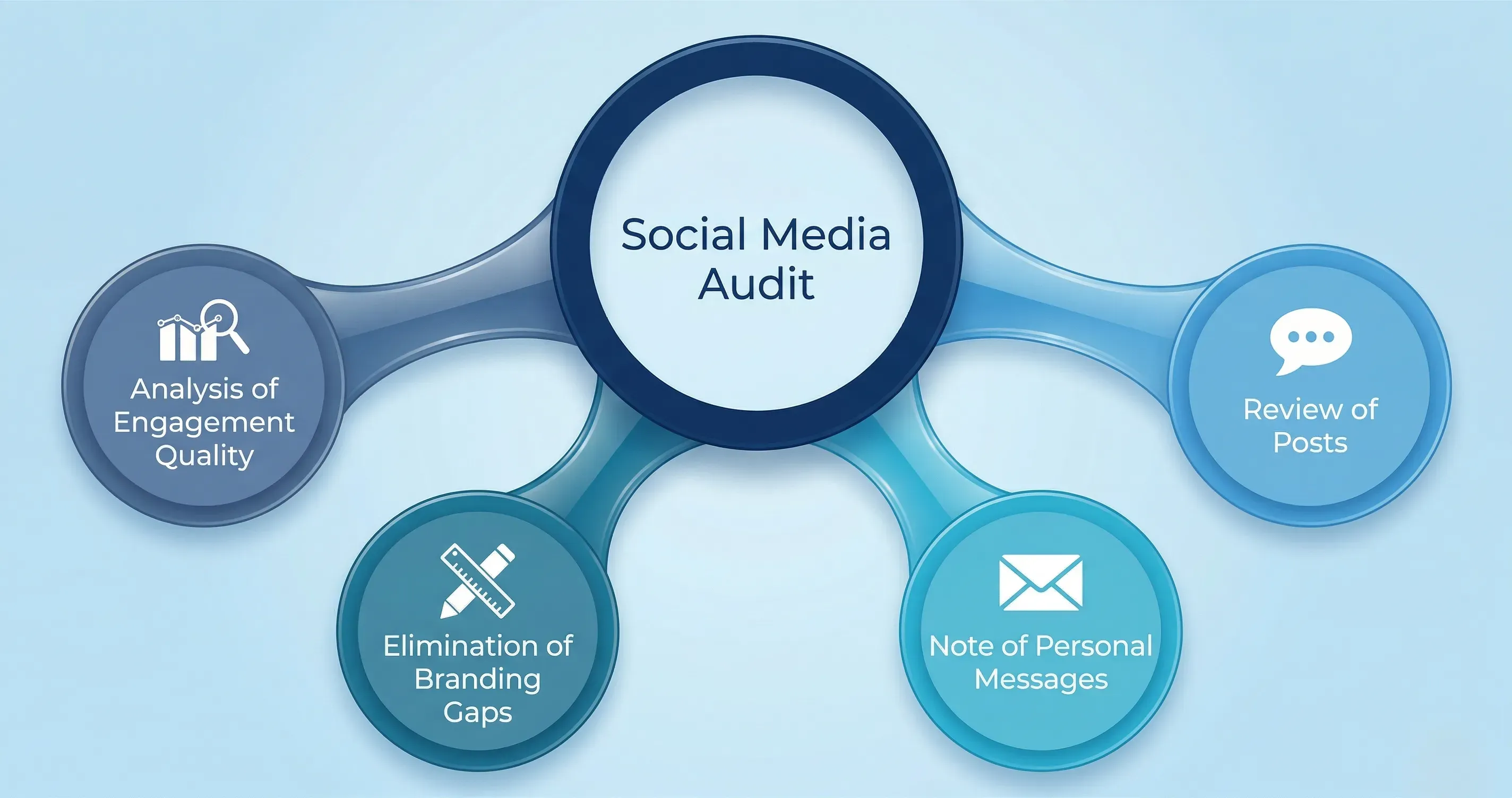
If you already have social accounts, even dormant or underperforming ones, audit them before building anything new. A social media audit is a comprehensive review of your current social media presence, including profile optimization, content performance, audience growth, and competitive positioning across all your social channels. It establishes your baseline and reveals immediate opportunities for improvement. Neal Schaffer
Go through each platform and ask the following questions. Are your profiles complete, on-brand, and optimized for search? What content has historically performed best, and why? Which platforms are actually driving traffic or conversions, versus which ones just feel active? What does your audience look like now compared to who you want to reach?
Document everything. This audit becomes the baseline against which you measure every future improvement.
Study Your Competitors
Competitor research is not about copying. It is about understanding the conversation your audience is already having and identifying the gaps your brand can own. Look at two or three direct competitors and two or three aspirational brands in adjacent categories. Note what formats they use, how often they post, what engagement looks like on their top content, and crucially, what questions their audience is asking in the comments that are going unanswered.
Step 4: Choose the Right Platforms

Quality Over Quantity, Always
Select social channels based on three factors: where your target audience is most active, which platforms align with your goals, and where your content format strengths match platform preferences. Focus on two to three platforms rather than spreading resources thin across many. It is far better to excel on a few platforms where your audience is active than to spread yourself thin across many social channels. Neal Schaffer
Here is a practical platform decision guide based on goal and audience:
For visual brand awareness targeting consumers, Instagram and TikTok are the primary choices. For B2B lead generation and professional credibility, LinkedIn is non-negotiable. For community building and long-form discussion, YouTube and dedicated communities like Reddit or Discord are increasingly relevant. For product discovery and social commerce, TikTok Shop, Instagram Shopping, and Pinterest are leading the conversion-first experience.
Being everywhere is not a strategy. It is a sure-fire way to burn out and dilute your message. In 2026, high-performing brands are mastering platform prioritization: showing up where their audience already spends time and creating content that feels native to each platform. SocialPilot
Step 5: Develop Your Brand Voice and Content Pillars
Define How Your Brand Sounds
Brand voice is one of the most underinvested assets in social media strategy. It is not just a tone guide. It is the personality that makes your content instantly recognizable regardless of format, platform, or topic. Before you write a single caption or script a single video, define three to five adjectives that describe how your brand communicates. Then define what those adjectives mean in practice and what they explicitly do not mean.
For example: Direct but not blunt. Warm but not saccharine. Expert but not arrogant. These distinctions matter because they give your content team clear guidance on the judgment calls that come up every single day.
Your audience began following you for a reason. Stick with your unique voice and style as much as possible and create content that authentically markets your brand. Sprout Social
Build Your Content Pillars
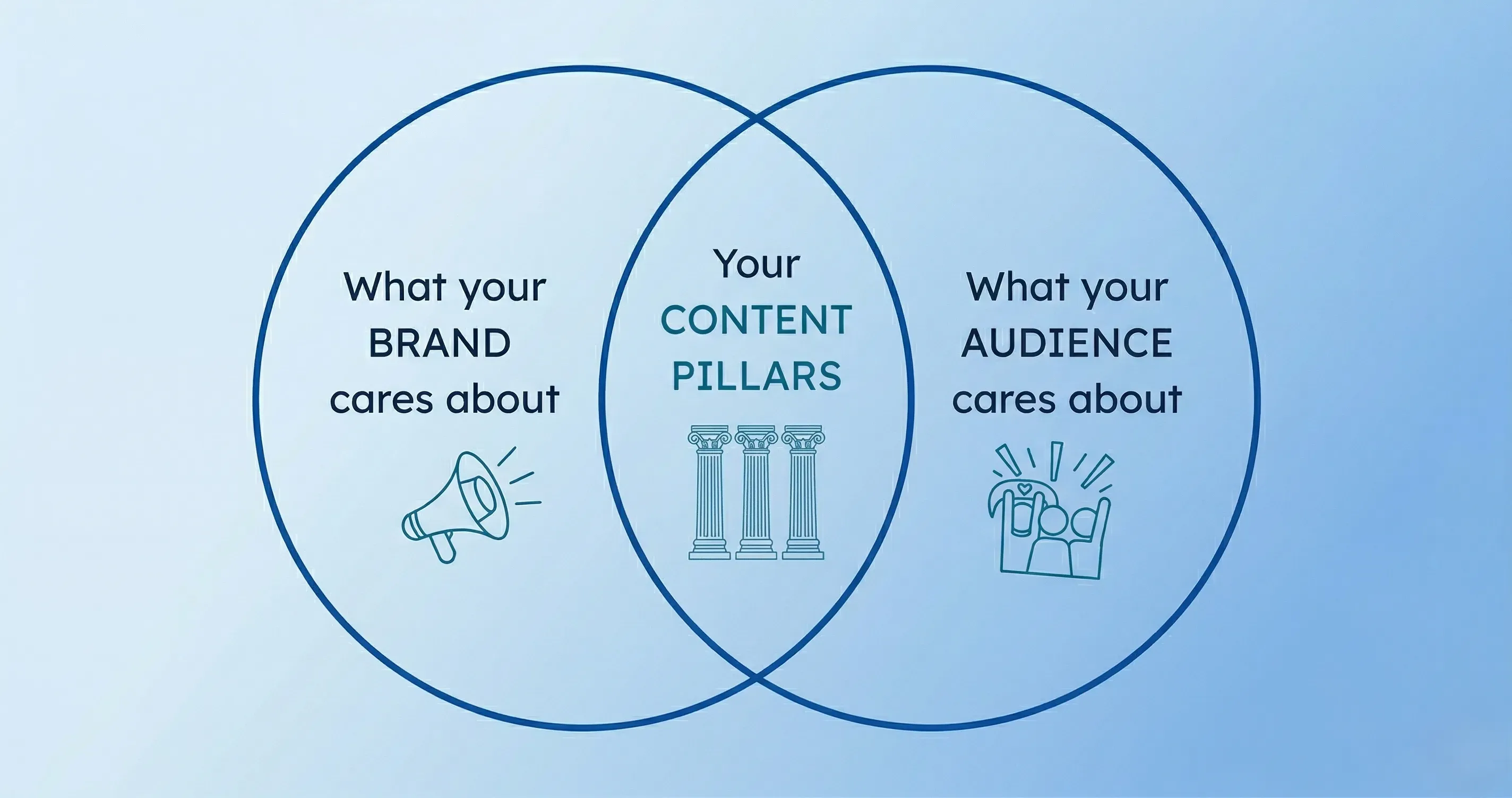
Content pillars are the recurring themes your brand talks about. They prevent the two most common content strategy failures: running out of ideas and becoming irrelevant to your audience.
A good pillar structure for most brands includes three to five themes. One pillar should directly serve your audience with education, tips, or insights related to your industry. One should showcase your product or service in an authentic, non-pushy way. One should build community and invite conversation. One should reflect your brand values or culture. The final one, if relevant, should capture trending or timely content relevant to your niche.
According to the 2026 Content Strategy Report, consumers want brands to prioritize human-created content, personalized moments, and social commerce. Building audience engagement in small digital spaces and collaborating with other companies are also significant content trends in 2026. Sprout Social
Step 6: Plan Your Content Mix and Format Strategy
The 50/30/20 Rule
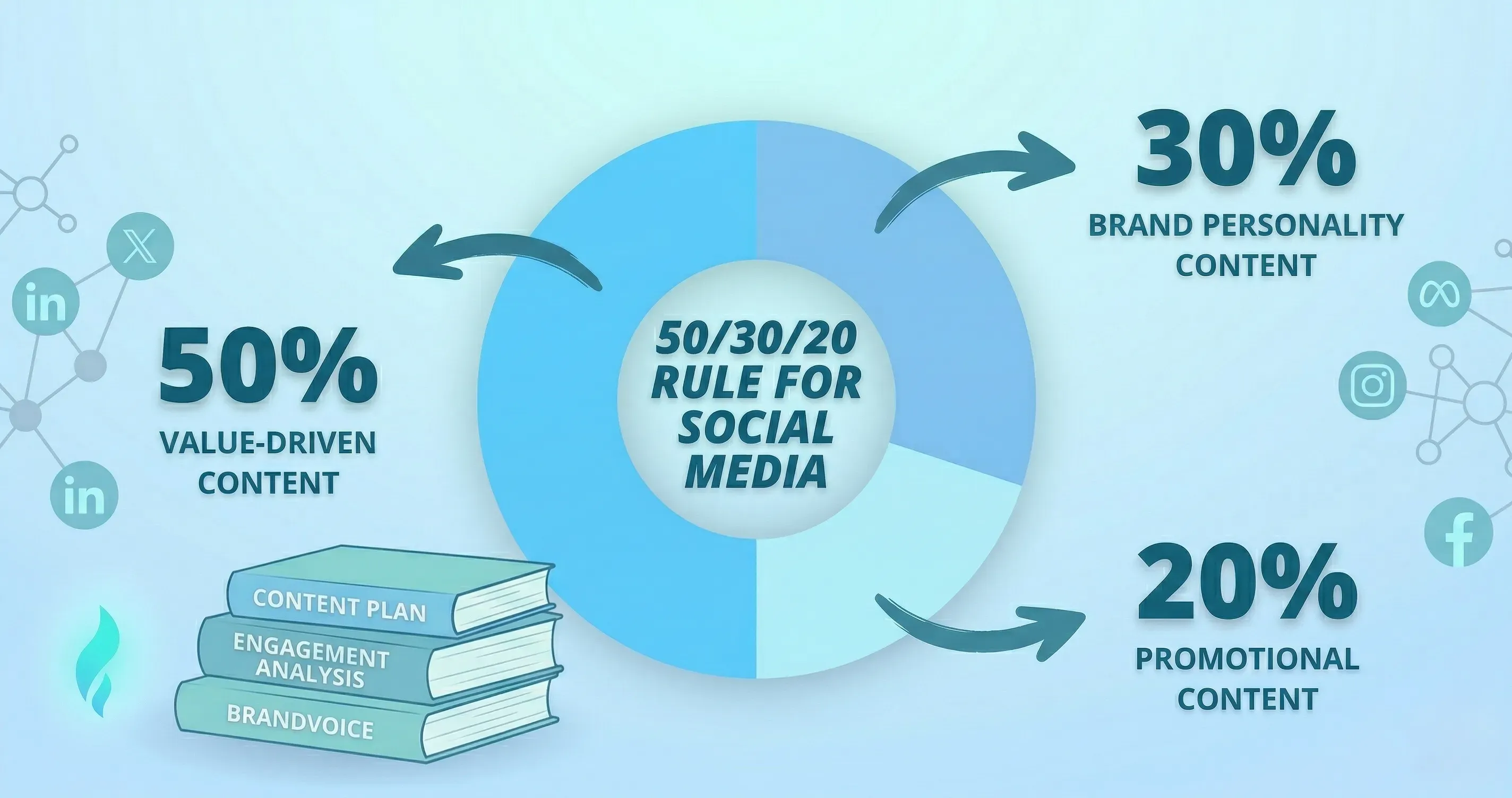
A proven starting point for content balance is the 50/30/20 framework. The 50/30/20 rule works as follows: 50% of content is for audience engagement and entertainment, 30% is for informing and educating the audience, and 20% is for direct brand promotion. Sprout Social This ratio ensures you are consistently delivering value before asking for anything in return, which builds the trust that eventually converts.
Choose Formats That Match the Platform and the Goal
In 2026, video remains the dominant format across virtually every platform, but how you use video matters as much as the fact that you use it. Short-form video content ideas that consistently perform well include quick how-to clips demonstrating practical tips in 15 to 30 seconds, micro-lessons breaking down insights into digestible points, comparison videos showing differences between tools or strategies, and reference content positioning videos as reusable guides rather than pure entertainment. Pinpoint Megacenter
Beyond video, carousel posts on Instagram and LinkedIn consistently drive high save rates and shares. Static images still perform for quotes, announcements, and product showcases when the visual is strong. Long-form content on YouTube and LinkedIn newsletters is seeing a strategic resurgence for brands building genuine authority.
Authenticity Beats Polish
One of the most important content insights of 2026 is that high production value no longer guarantees high performance. Up to 92% of consumers trust word of mouth and user-generated content more than other forms of traditional brand advertising. Customers are turning away from branded content and instead looking to creators they view as peers for recommendations, motivated by a desire for more authenticity online. National University
Among global consumers, their number-one concern about brands on social media is companies posting AI-generated content without disclosing it. Meanwhile, 55% of social users said they are more likely to trust brands that publish human-generated content, rising to two-thirds of Gen Z and Millennials. Pravaah Consulting
This does not mean production quality does not matter. It means that authenticity, specificity, and genuine human perspective matter more.
Step 7: Build Your Content Calendar
Move From Strategy to Execution
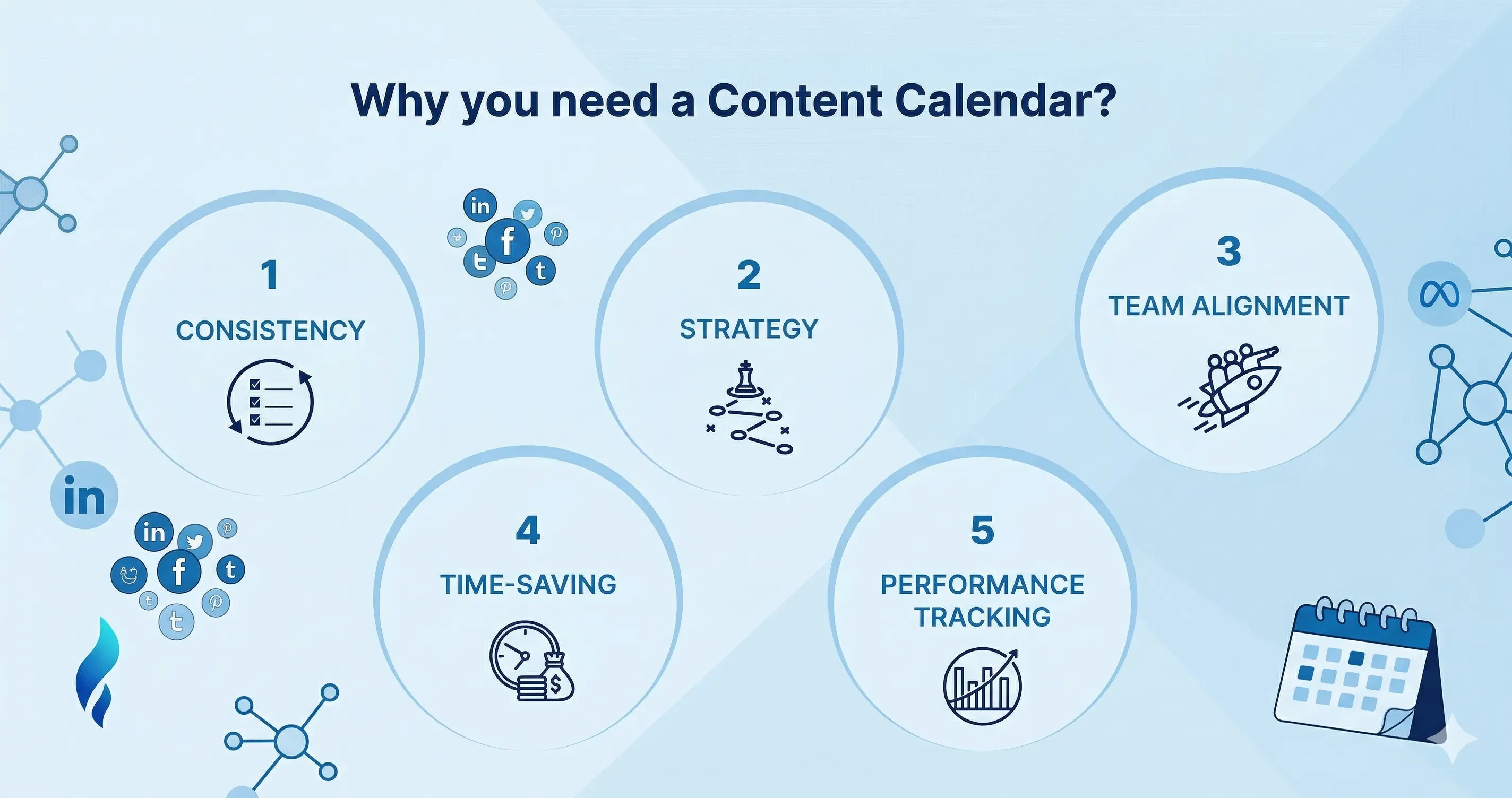
A content calendar is where strategy becomes reality. Without one, even the best-planned strategy collapses under the pressure of daily execution. A social media strategy is the overarching big-picture plan that defines your goals and how you will achieve them. The content calendar is the tactical day-to-day schedule of what to post, when to post, and on which platform. Sprout Social
Start with a monthly view. Map out any key dates relevant to your business or industry: product launches, seasonal moments, industry events, cultural calendar dates. Then fill in your recurring content pillars around those anchors. Aim for consistency above frequency. Three well-crafted posts per week will outperform seven rushed ones every time.
For each piece of planned content, document the platform, format, content pillar it belongs to, the primary goal it serves, the call to action, and how you will measure its performance. This level of documentation turns a calendar from a scheduling tool into a strategic instrument.
Use Tools to Stay Consistent
Managing multiple platforms manually is a recipe for burnout. Tools like Metricool, Sprout Social, Buffer, and SocialPilot allow you to plan, schedule, and publish across platforms from a single dashboard, with analytics that surface what is working without requiring you to manually pull reports from every platform individually.
Step 8: Optimize for Social Search
Treat Social Content Like SEO Content
Social search is the practice of using platforms like TikTok, Instagram, and YouTube as the primary search engine for product research, how-to queries, and local discovery. What this means for your strategy: treat every caption, on-screen text, and video script as an indexable search document. Use natural-language keyword phrases rather than hashtag clusters alone. Optimize your profile bio as a landing page, not just a tagline. Pravaah Consulting
This is one of the most important strategic shifts brands can make in 2026. Think about the questions your ideal customer is typing into TikTok or Instagram search. Now build content that directly answers those questions. Title your videos the way someone would search for them. Include relevant keywords in captions naturally, not as stuffed hashtag lists.
Platform-specific search optimization matters too. On YouTube, this means detailed video descriptions and chapter markers. On Instagram, this means alt text on images and keyword-rich captions. On LinkedIn, this means using industry-specific language that your target audience actually searches.
Step 9: Build Community, Not Just an Audience
Engagement Is a Two-Way Street
Successful brands on social media treat their followers like people, not numbers. That means starting conversations, replying to comments and DMs, and encouraging user-generated content. Metricool
An audience watches. A community participates. The shift from one to the other happens when your brand consistently shows up in the comments, responds to DMs, acknowledges feedback publicly, and creates content that invites response rather than just consumption.
User-generated content builds instant trust. Feature customer shoutouts, tag reposts, and community reactions to show you are not just broadcasting but listening. SocialPilot Give your audience a reason to create content about you by making the experience remarkable, running challenges, or simply asking for their opinions and genuinely responding.
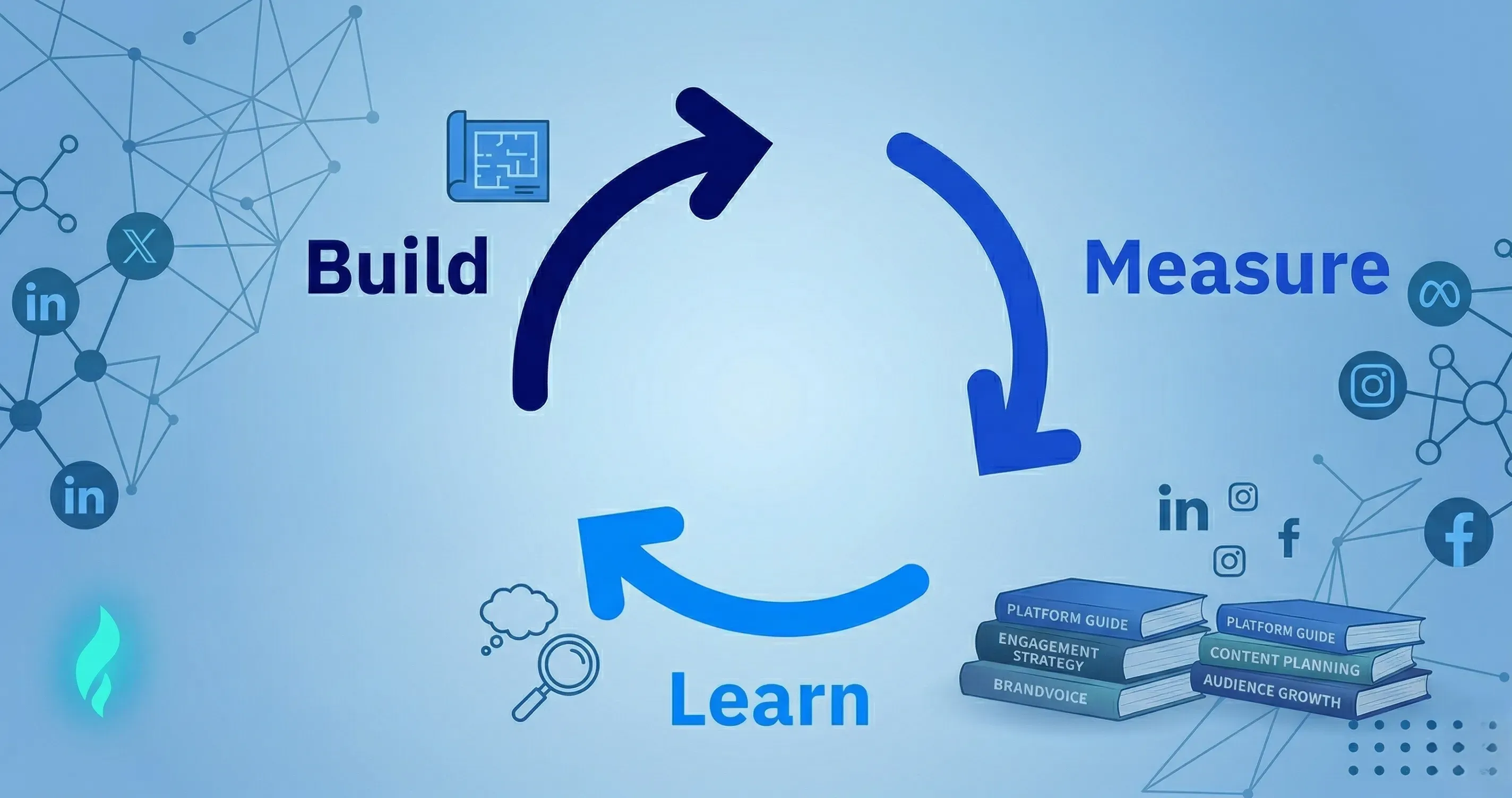
Step 10: Measure, Learn, and Iterate
The Strategy Is Never Finished
The brands that win on social media long-term are not the ones with the most creative ideas. They are the ones who measure rigorously, learn quickly, and adapt without ego.
Analytics tell you what is working and what needs tweaking. Tracking engagement, reach, and conversions helps you adjust your strategy and get better results over time. Metricool
Set a monthly review cadence. Look at which content types drove the most engagement, which platforms drove the most website traffic, which posts drove the most conversions, and what your audience commented or messaged most frequently. Use this data to double down on what works, sunset what does not, and continuously sharpen your understanding of your audience.
If video content consistently outperforms static posts, allocate more resources to video production. This data-driven approach ensures continuous improvement and better ROI. My Blog Poster
Conclusion: Strategy Is What Separates Sustainable Growth From Random Results
Building a social media content strategy from scratch is not glamorous work. It requires honest goal-setting, disciplined audience research, clear brand positioning, and consistent execution before you see meaningful results. Most brands skip the foundation and go straight to posting. That is why most brands plateau.
The brands growing on social media in 2026 are the ones treating it like the serious business channel it has become. They are documenting their strategy, optimizing for search, building communities rather than chasing followers, and measuring everything against real business outcomes.
Start with your goals. Build backward from there. Post with purpose. Measure honestly. Iterate relentlessly. That is the entire strategy, and it works every time it is actually followed.